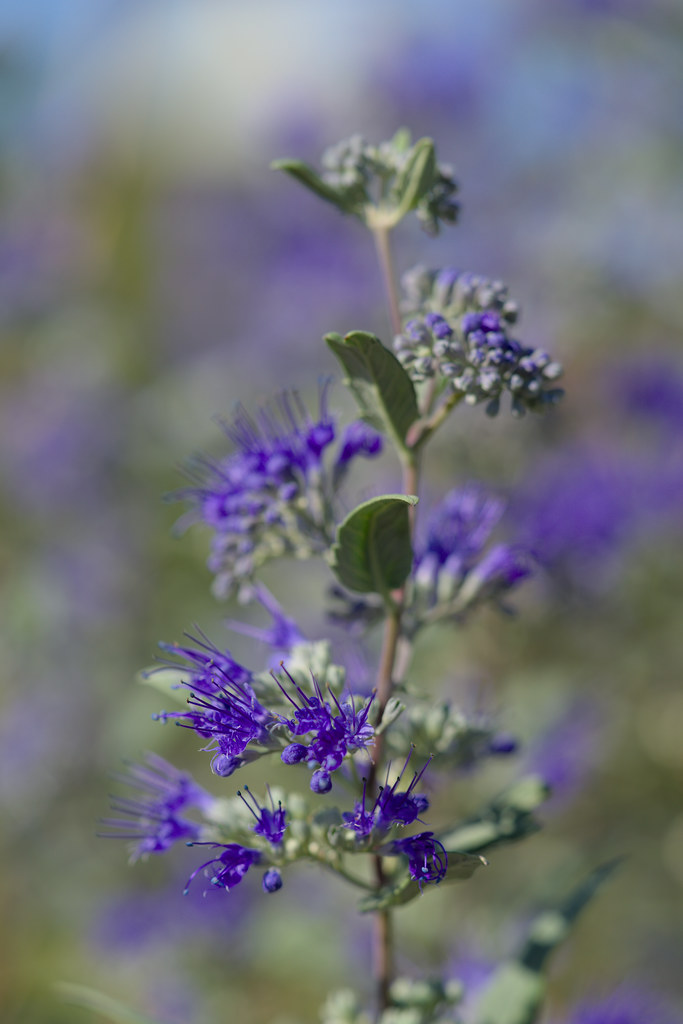
bluebeard
Caryopteris clandonensis 'Heavenly Blue'
Overview
Bluebeard (Caryopteris clandonensis 'Heavenly Blue') is an amazing plant for gardens of all sizes. With its showy, dark green foliage and bright blue flowers, it can be an attractive focal point or a beautiful background for any garden. Blooming from August to October, it provides late season color, attracting beneficial pollinators. It is also low maintenance and drought tolerant, making it an ideal choice for sunny borders and beds. To top it off, it's easy to propagate, so you can create a stunning display of heavenly blue blooms in no time.
Care Guide
Watering
Bluebeard should be watered once a week, using 1-2 inches of water. Apply the water slowly to give it time to soak into the soil. Keep an eye on the soil moisture and adjust the watering frequency based on the needs of the plant. During the heat of summer, check the soil often as it may require an additional watering. During the cooler months, water sparingly as Bluebeard isn't a fan of wet soils.
Light
Bluebeard (Caryopteris clandonensis 'Heavenly Blue') plants prefer a sunny spot for maximum flowering and growth. Aim for at least 6 hours of direct sun each day, with 8 hours being ideal. If you are growing Bluebeard in a pot, make sure to turn the pot so that the leaves can get the sunlight they need to reach their full potential. Bluebeard are happiest in slightly alkaline soil, so avoid any areas that have recently been limed. Give the plants water regularly throughout the summer months, and make sure to water deeply when the soil surface begins to lose its moisture. Doing so will help to cause the roots to grow deep and strong.
Temperature
Hardiness zone 5–9.
Pruning
Caryopteris clandonensis 'Heavenly Blue', or bluebeard, should be lightly pruned twice a year for best performance. In the spring, remove dead or damaged stems and lightly shape plants, if necessary. Late summer or early autumn is also an ideal time to prune, cutting back the stems by 1-third to 1-half their original length to promote new growth and maintain a desired shape. Be careful to not prune too severely, since too much pruning can weaken the plant. When pruning, keep in mind that cutting any branches back too close to the base can keep them from refoliating and produce an unsightly thinning.
Propagation
Cutting, Layering Propagation, Division, Seed Propagation
Related plants
Other plants you might like if you grow bluebeard.