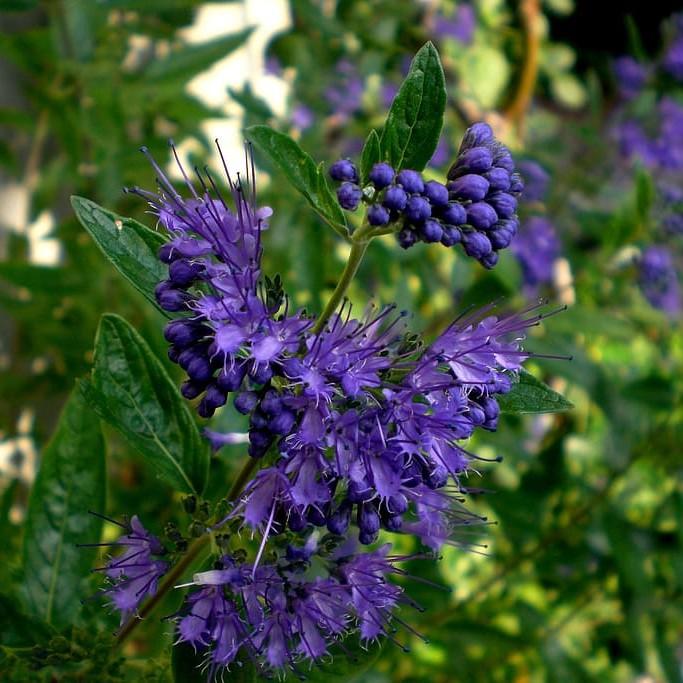
bluebeard
Caryopteris clandonensis 'Longwood Blue'
Overview
The Caryopteris clandonensis 'Longwood Blue' plant, also known as Bluebeard, is truly amazing. It has a unique, fragrant smell that attracts hummingbirds, and its attractive blue flowers are an eye-catching addition to the garden. It grows quickly and is an excellent choice for climates across the United States. Its foliage is a deep green, and it can reach heights of three to four feet - just Perfect for a privacy hedge. It is an easy-care drought and deer resistant shrub that is perfect for a casual, natural garden look. Its hardiness makes it a great companion to many other plants. There is no need to debate, Bluebeard is truly an amazing plant.
Care Guide
Watering
Bluebeard should be watered once a week and requires approximately 1 inch of water at each watering. If the area is in a period of extreme drought, the frequency of watering can be increased, however Bluebeard is not tolerant to wet soils, so it is important not to overwater. If the area experiences extreme wet periods, either reduce the watering schedule or allow extra-good drainage so the soil does not become soggy.
Light
Bluebeard (Caryopteris clandonensis 'Longwood Blue') should be grown in a location with full sun exposure for most of the day to ensure the best possible growth and flowering. The plant should be transplanted into an area of the garden that will receive at least 6-8 hours of direct sunlight per day. To keep the plant looking its best, it should receive full sun during the peak hours of the day, 9:00AM - 5:00PM. In addition, Bluebeard benefits from afternoon shade or partial shade during the hottest part of the day, between 11AM - 2PM.
Temperature
Hardiness zone 5–9.
Pruning
Bluebeard (Caryopteris clandonensis 'Longwood Blue') should be pruned in the early spring before the new growth appears. Pruning should consist of cutting back all the stems to about 12 to 15 inches, removing any thin, weak or damaged stems as well. This will promote dense, bushy growth and encourage the formation of blue-violet flowers in autumn. Deadheading (removal of spent blooms) is also recommended to encourage further flowering.
Propagation
Cutting, Layering Propagation, Division, Seed Propagation
Uses & Symbolism
Attracts: Butterflies.
Related plants
Other plants you might like if you grow bluebeard.