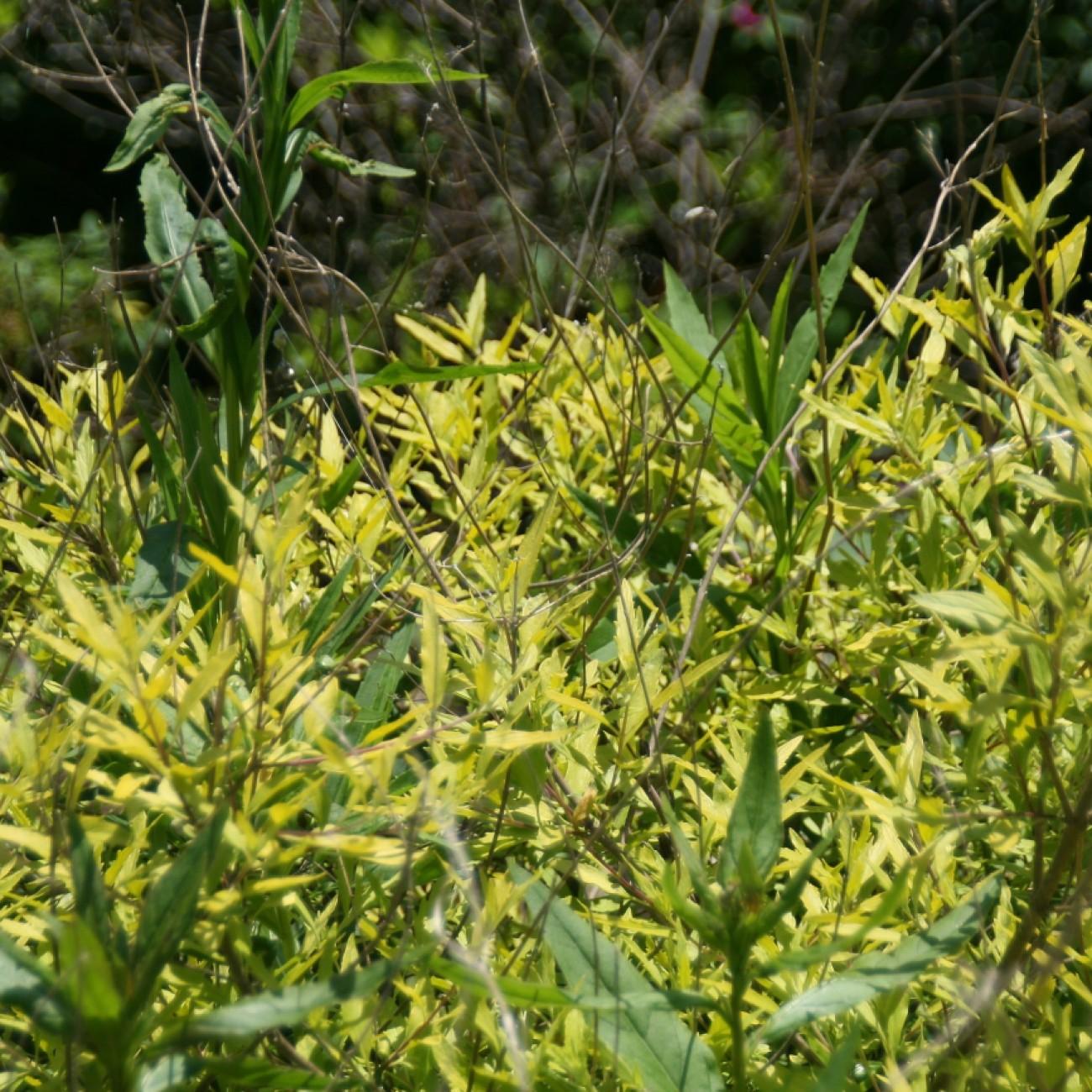
bluebeard
Caryopteris clandonensis 'Worcester Gold'
Overview
The Bluebeard (Caryopteris clandonensis 'Worcester Gold') is an amazing addition to any garden. Its unique foliage is bright golden-yellow with contrasting purple flowers in the late summer and early autumn. The foliage is fragrant, with a sweet, citrus scent. This low-maintenance, hardy shrub grows upright, and reaches heights of up to 6ft tall. It's drought-tolerant and tolerant of many soil types, making it a great choice for a variety of garden styles and locations. The cheerful flowers provide an abundant source of nectar for pollinators, while its bright foliage gives excellent year-round interest.
Care Guide
Watering
When watering a bluebeard, be sure to water it deeply to ensure the roots are adequately moistened. Allow the top 1 - 2 inches of soil to dry before thoroughly watering the plant again. Generally, bluebeards require weekly watering during the warmer growing season and every other week during cooler months. In very hot climates, supplemental watering may be needed during any season's drier periods.
Light
Bluebeard (Caryopteris clandonensis 'Worcester Gold') prefers to have full sun for at least 6-8 hours a day. If possible, the plant should be planted in an area that gets full sun in the morning and dappled shade in the afternoon to protect against leaf burn. As a bonus, the golden foliage of this variety of Bluebeard will sparkle in the sun, making it an even more attractive addition to any garden!
Temperature
Hardiness zone 5–9.
Pruning
Bluebeard should be pruned in mid- to late spring, once the buds swell and the danger of frost has passed. You should cut back any dead wood, shaping the plant as desired. Remove 1/3 of the oldest, tallest stems each year to keep the plant at a manageable size and to promote new growth. Avoid pruning too heavily, as this will damage the health of the plant. By cutting back the branches, you can encourage flushes of new foliage and larger bloom clusters.
Propagation
Cutting, Layering Propagation, Division, Seed Propagation
Uses & Symbolism
Attracts: Butterflies.
Related plants
Other plants you might like if you grow bluebeard.