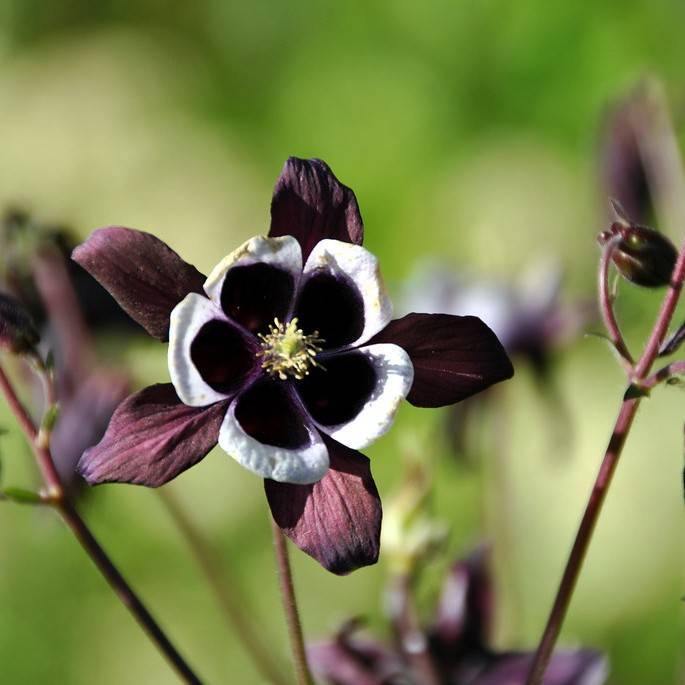
columbine
Aquilegia vulgaris 'William Guiness'
Overview
The Columbine (Aquilegia vulgaris 'William Guiness') is truly an amazing flower. Its bright yellow and blue colors make it stand out above other flowers as a show-stopping display in any garden. The blossom's distinctive petals curl and mix together to form a beautiful shape, while the plentiful leaves add a lushness to the plant. This cultivar is also very hardy and easy to care for, making it a great addition to rock gardens and flower beds alike. Not to mention, the delightful aroma that it emits will attract pollinators and hummingbirds to your outdoor space. Whether for its spectacular colors, easy maintenance, or delightful scent, the Columbine 'William Guiness' is sure to delight in any garden.
Care Guide
Watering
Columbine (Aquilegia vulgaris 'William Guiness') prefers moist soil but should not sit in standing water. The best way to water is to give it a deep drink and then allow the soil to dry out between waterings. This means watering it every other day or every 2 days for the first month, and then tapering off to about once a week once it is established. Don't let the soil dry out too much in between waterings. If it looks dry on the surface, dig down about 1 inch to check the soil's moisture level. If it is dry, water thoroughly.
Light
The columbine plant species, Aquilegia vulgaris 'William Guiness', will do best with full sunlight during the day. It needs about 6 to 8 hours of direct sunlight to grow and bloom optimally. However, this plant specie is tolerant of partial shade, and will do well with 3 to 6 hours of direct sunlight too. During peak summer months in very hot climates, partial shade may be beneficial for this plant to prevent heat stress. It is important to note that this plant will do poorly in perpetually shaded or dark environments.
Temperature
Hardiness zone 3–8.
Pruning
Columbine (Aquilegia vulgaris 'William Guiness') can be pruned in late winter or early spring. A light trim should be performed to remove any dead or diseased material and can be followed by a hard prune to encourage new growth. Pinching off the tips of the growths will encourage bushier growth and can make the plant look more full. Deadheading spent blossoms throughout the season will also help to encourage blooms. Pruning should stop in mid-summer to prevent damage to new growth that will emerge the following season.
Propagation
Division, Cutting, Seed Propagation, Layering Propagation
Uses & Symbolism
Attracts: Hummingbirds.
Diseases & Pests
Common pests: Leaf miner insect, Disease resistant, Deer resistant, Rabbit resistant .
Related plants
Other plants you might like if you grow columbine.