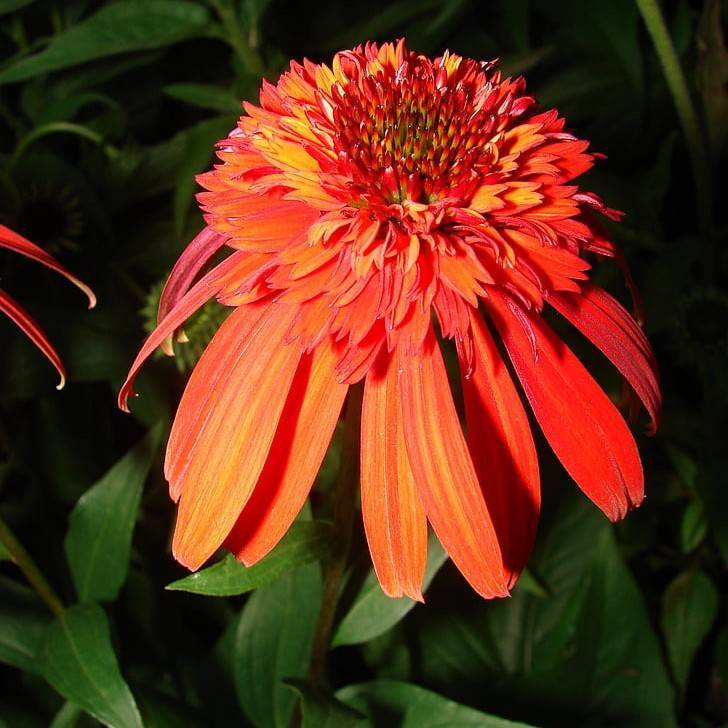
coneflower
Echinacea (Supreme Series) 'Cantaloupe'
Overview
The 'Cantaloupe' Coneflower is a gorgeous and vibrant bloom, featuring a striking salmon-orange daisy-like flower with a deep black-red centre. This beauty stands 20-24 inches tall and is excellent for attracting pollinators, and provides loads of colour for your garden or outdoor spaces. The Coneflower is highly resistant to drought, deer, and other plant diseases, and will remain in bloom from June through fall. Its simple beauty is sure to make your garden look alive and vibrant all summer long!
Care Guide
Watering
Coneflower (Echinacea (Supreme Series) 'Cantaloupe') should be watered about once a week and about 1-1.5 inches of water. This should be done either early in the morning or late in the evening so that the soil has time to absorb the water and the foliage has time to dry out before night falls. When watering, do not pour all of the water onto the plant in 1 sitting, rather, water in stages. After each stage of watering, pause to allow the soil to absorb the moisture. Do not water the foliage of this plant as it is prone to fungal diseases. Try to keep it consistently moist, but not soggy, as this could lead to root rot.
Light
Coneflower (Echinacea (Supreme Series) 'Cantaloupe') is best grown in full sun to get the most out of its naturally striking petals. It thrives in 6-8 hours of direct sunlight each day. If possible, plant it in an area of the garden that is exposed to sunshine during the mid-morning and late afternoon/early evening hours, as this flowering plant likes a bit of warmth during the night. Make sure the flowers have enough afternoon shade to prevent its foliage from drying out too much and damaging the plant. In the summer months, you may need to provide additional protection from the intense mid-day sun.
Temperature
Hardiness zone 3–8.
Pruning
Light pruning of coneflower (Echinacea (Supreme Series) 'Cantaloupe') can be done in the early spring or just after the flower blooms. Pruning should be done sparingly and should focus on removing any dead or diseased foliage and spent flowers. Remove the flower heads to help maintain the plant’s shape and encourage new flower production. Pruning too much or at the wrong time can reduce the number of flowers the plant will produce, so it is important to be as judicious as possible when pruning coneflowers.
Propagation
Division, Cutting, Seed Propagation, Layering Propagation
Related plants
Other plants you might like if you grow coneflower.