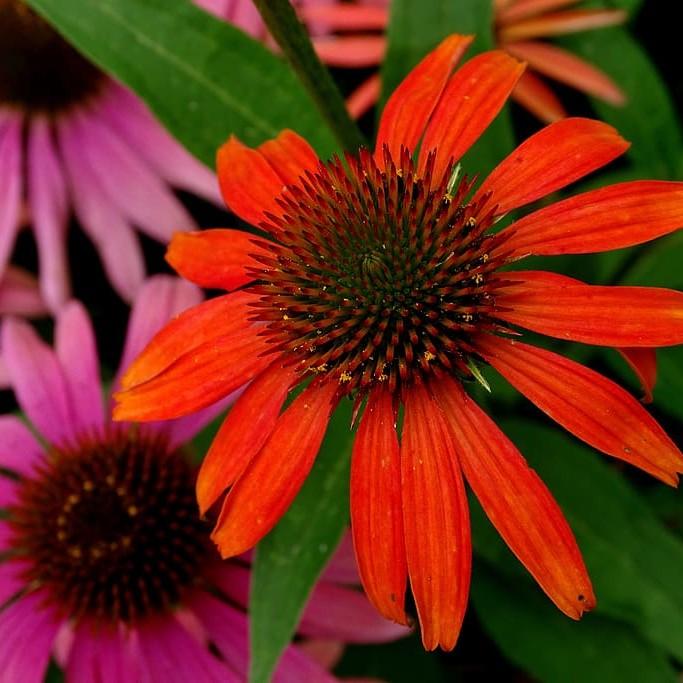
coneflower
Echinacea 'TNECHKIO' KISMET INTENSE ORANGE
Overview
Coneflowers (Echinacea 'TNECHKIO' KISMET INTENSE ORANGE) are an amazing species because of their unique beauty. With long, daisy-like petals in a deep and vibrant shade of orange, these flowers will bring a gorgeous spark to any garden. Not only do they bring incredible visual appeal, they're also extremely hardy and drought-tolerant. Plant them in the ground or in containers and you'll enjoy their spectacular blooms all throughout the growing season. And best of all, coneflowers are deer, rabbit, and mole resistant, allowing them to flourish without interruption!
Care Guide
Watering
Coneflower (Echinacea 'Tnechkio' Kismet Intense Orange) should be watered approximately once every week or when the top 1-2 inches of soil is dry. To water, use a watering can or if able, use a garden hose with a gentle shower setting. Water until the soil is saturated and you can see water coming out of the drainage holes. Allow the soil to completely dry between waterings. Always be careful to not over-water, as too much water can lead to root rot and other issues with this particular species of plant.
Light
The cone flower (Echinacea 'TNECHKIO' KISMET INTENSE ORANGE) is an easy to grow perennial, and does best with full sun. For best results, aim for around 6-8 hours of sunlight per day, preferably in the middle of the day when the sun is at its strongest. Avoid planting in overly shaded areas as this can produce leggy growth, that can lead to fungus and disease. The plant should be placed in an area with good air circulation, this helps promote healthy growth. For optimal growth and flowering, direct sunlight is best.
Temperature
Hardiness zone 4–9.
Pruning
When it comes to pruning coneflowers (Echinacea 'TNECHKIO' KISMET INTENSE ORANGE), it is important to be mindful of the timing. Generally, coneflowers should be pruned when the flowers begin to fade, usually in mid-summer. This will help keep the plant looking neat and healthy. It is best to wait until after the seed heads have just finished blooming and then cut off the top of the stem 1 to 2 inches above a set of healthy leaves. This should be done in the early evening when the plant is not in direct sunlight. The amount of pruning needed should not be excessive - no more than 1-third of the plant should be removed. Doing too much pruning can seriously weaken the plant, leaving it susceptible to disease and pests. When pruning, it is important to use sterilized pruning shears to prevent the spread of disease and pests.
Propagation
Division, Cutting, Seed Propagation, Layering Propagation
Uses & Symbolism
Attracts: Birds, Butterflies.
Related plants
Other plants you might like if you grow coneflower.