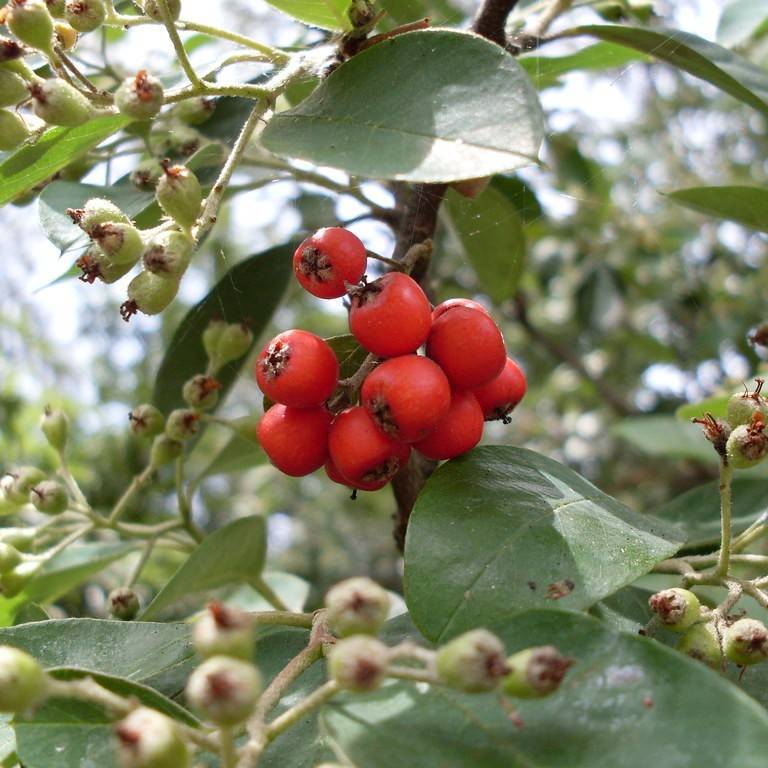
cotoneaster
Cotoneaster glaucophyllus
Overview
Cotoneaster glaucophyllus, also known as the mountain cotoneaster, is a stunningly beautiful shrub with a long flowering season. Its intricate, glossy dark green leaves have gorgeous silver-white undersides, while its white flowers are followed by juicy orange-red fruits. Hardy and low-maintenance, the mountain cotoneaster requires little care; a deep watering followed by a slow release fertilizer once a year is all that’s needed for proper growth. Whether used as a hedge or as a striking focal point in the garden, the mountain cotoneaster is sure to attract attention and become an amazing addition.
Care Guide
Watering
Cotoneaster glaucophyllus prefers a moderate amount of water, but should never be left in a waterlogged state or allowed to dry out completely. It's best to water thoroughly when the top few centimeters of soil are dry. During hot summers, water about twice a week. In late spring and summer, you can reduce the watering if the plant shows signs of wilting. In fall and winter, reduce watering to once a week, and in the coldest months, water just enough to keep the soil from drying out completely. Be careful not to over-water, as this can cause the root system to rot.
Light
Cotoneaster glaucophyllus generally prefers full sun but will tolerate light shade. It thrives best under direct, bright sunlight for at least 6 hours per day but will tolerate somewhat less, such as 4-5 hours per day. While it can tolerate some shade, it should not be planted in a shaded area for extended periods of time because it will not receive enough light to flower and develop attractive foliage.
Temperature
Hardiness zone 7–9.
Pruning
Pruning of Cotoneaster glaucophyllus should take place shortlyright after flowering has finished, which usually occurs during late spring. The best time is to wait until the dead wood has become nicely dry so that the branches will not tear upon cutting. Light pruning should be done to encourage air circulation and reduce the amount of overcrowding of the branches. To do this, selectively remove large, misshapen, or crossing limbs. These can be removed with anvil pruners and pruning saws. A more drastic pruning of about 1/3 of the entire plant can be done every 3-5 years if needed. Avoid pruning this plant during the winter or when the shoots are actively growing.
Propagation
Cutting, Layering Propagation, Grafting Propagation, Division, Seed Propagation
Uses & Symbolism
Attracts: Birds.
Related plants
Other plants you might like if you grow cotoneaster.