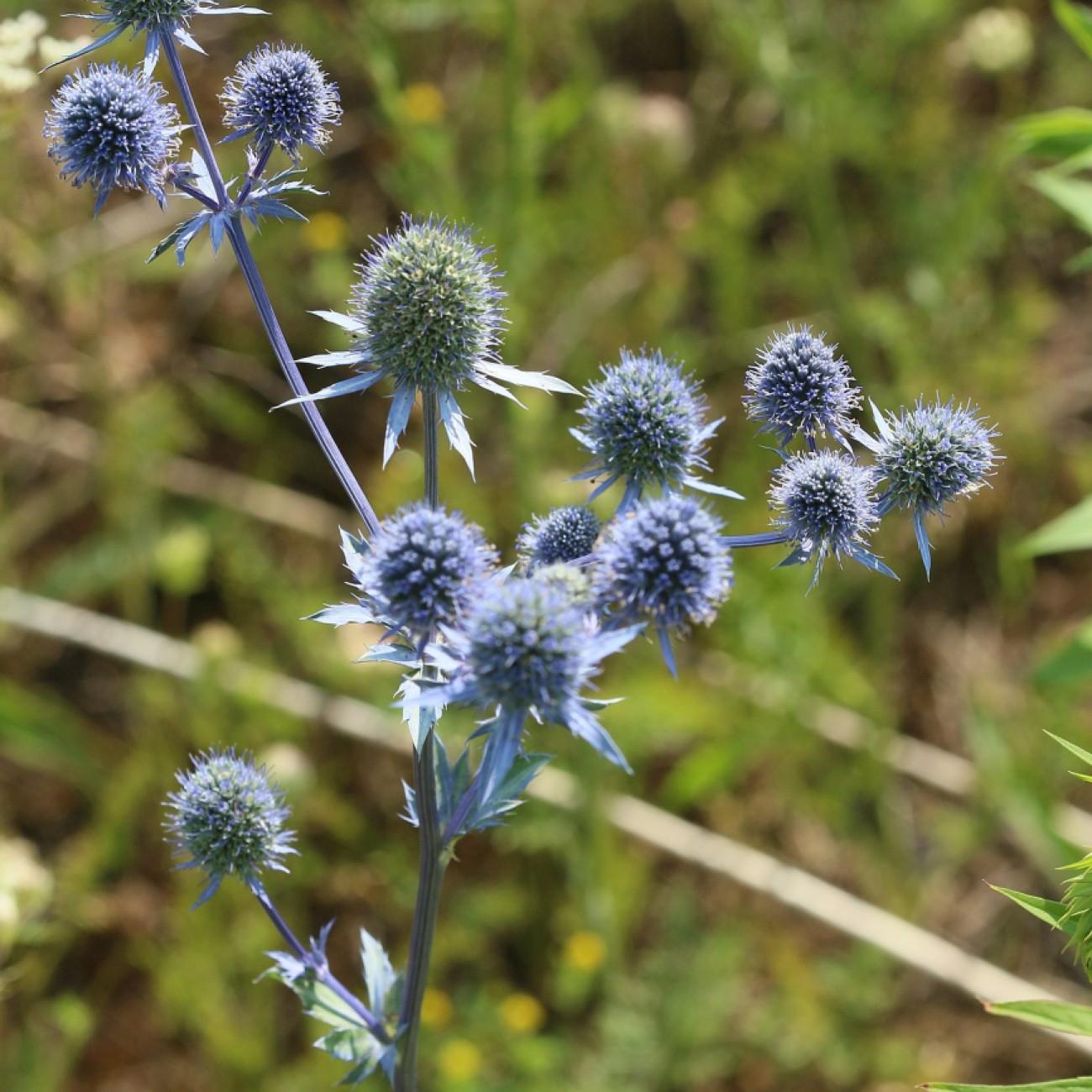
eryngo
Eryngium aquaticum
Overview
Eryngo (Eryngium aquaticum) is an amazingly unique plant species. It grows in shallow, fresh and brackish water wetlands and produces beautiful bluish white flowers, making it a great addition to any garden. Its stem is covered in greyish-green spines that add a unique texture to the landscape. The plant is edible and its roots and young shoots can be cooked and eaten, adding an interesting variety to the diet. Its distinct leaves give a very interesting look to the garden bed and it's a great flower for drawing bees and butterflies. In addition, the tough and long-lasting nature of this plant makes it a very low-maintenance choice.
Care Guide
Watering
Eryngo (Eryngium aquaticum) should be watered when the top inch of soil feels dry to the touch. When doing so, make sure to give it a thorough soaking, allowing water to penetrate deeply into the soil. Allow for the top inch or so of soil to dry out before watering again. In general, it should be watered every 3-4 days in the summer months and every 5-7 days in the winter months.
Light
Eryngo plants require full sun for optimal growth and vigor. It is ideally suited for growing in USDA zones 5-9, and is happiest when placed in a bright, sunny location that receives at least 5 hours of direct sunlight each day. It does not tolerate excessive moisture or shade, so a well-drained location is best. It is important to remember that the amount of sunlight your plant receives on any given day will be affected by weather conditions, so make sure to adjust your watering and other care activities accordingly.
Temperature
Hardiness zone 6–8.
Pruning
When it comes to pruning Eryngo (Eryngium aquaticum), it's best to reserve pruning for late spring. The plant naturally flowers during the summer months, so by pruning in spring you ensure that you give the flowering period a boost and help revive the plant over the summer. Generally it is best to prune the plant back anywhere between 20% to 30%, removing the dead flower spikes and trimming the longest stems of the year. This will promote a healthier, bushier growth, and eliminate overcrowding of the foliage. It's also best to avoid pruning too heavily as this can potentially damage the plant.
Propagation
Division, Cutting, Seed Propagation, Layering Propagation
Related plants
Other plants you might like if you grow eryngo.