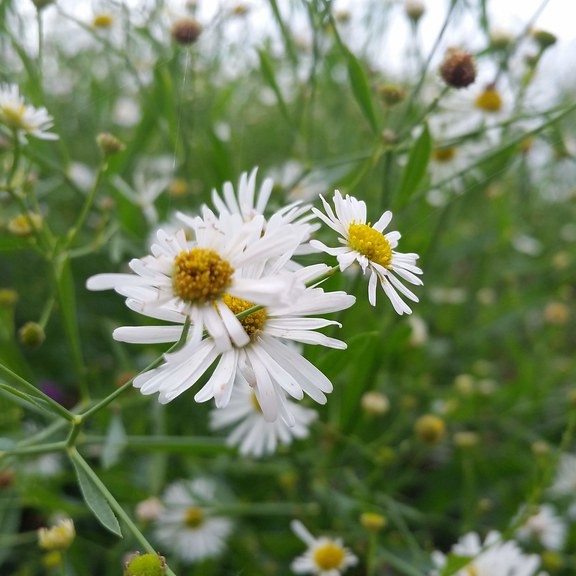
false aster
Boltonia asteroides 'Pink Beauty'
Overview
False aster (Boltonia asteroides 'Pink Beauty') is an amazing plant species that blooms with fragrant pink and white flowers in late summer. False Aster can grow up to five feet tall, forming attractive clusters of star-shaped blooms that attract birds, butterflies and other pollinators. Its bright green leaves are deeply serrated and its adaptability to many soil types make it an easy-to-grow and low-maintenance plant. It tolerates wet conditions well and is resistant to deer and other pests. bloom from late summer to early autumn. The fragrant blooms will not disappoint and you’ll enjoy their beauty for weeks.
Care Guide
Watering
False aster (Boltonia asteroides 'Pink Beauty') needs regular watering to keep its roots healthy and encourage lush growth. Water deeply but infrequently; you can provide approximately 1 inch of water once per week. If rainfall is sparse, you may need to increase the amount of water given to the plant. Make sure to check the soil for moisture before watering to ensure it is not too soggy or dry. Additionally, keep an eye out for signs of general wilting or yellowing to know when your false aster needs additional water.
Light
False Aster (Boltonia asteroides 'Pink Beauty') prefers full sun exposure. Generally, it should be planted in an area that receives at least 5 to 6 hours of direct sunlight every day. When planting it in areas with more extreme temperatures, it should be placed in an area that receives some partial shade throughout the day. It may also need some protection during the hottest time of the day. During the winter, it should receive as much sunlight as possible.
Soil
Well-drained
Temperature
Hardiness zone 3–10.
Pruning
False Aster (Boltonia asteroides 'Pink Beauty') should be pruned annually in the spring, just before the new growth begins. Pruning should be done right after flowering, by cutting back the stems to half their original length. This will help to encourage bushiness, fuller growth and more profuse flowering. Deadheading can also be performed to help control the spread of unwanted seedlings. Finally, pinch back the tip of any particularly tall stems to help maintain a neat and uniform shape.
Propagation
Seed Propagation
Uses & Symbolism
Attracts: Butterflies.
Diseases & Pests
Common pests: Anthracnose, Fungal leaf spot, Mildew, Rust, Pest resistant, Deer resistant, Rabbit resistant, Drought resistant .
Related plants
Other plants you might like if you grow false aster.