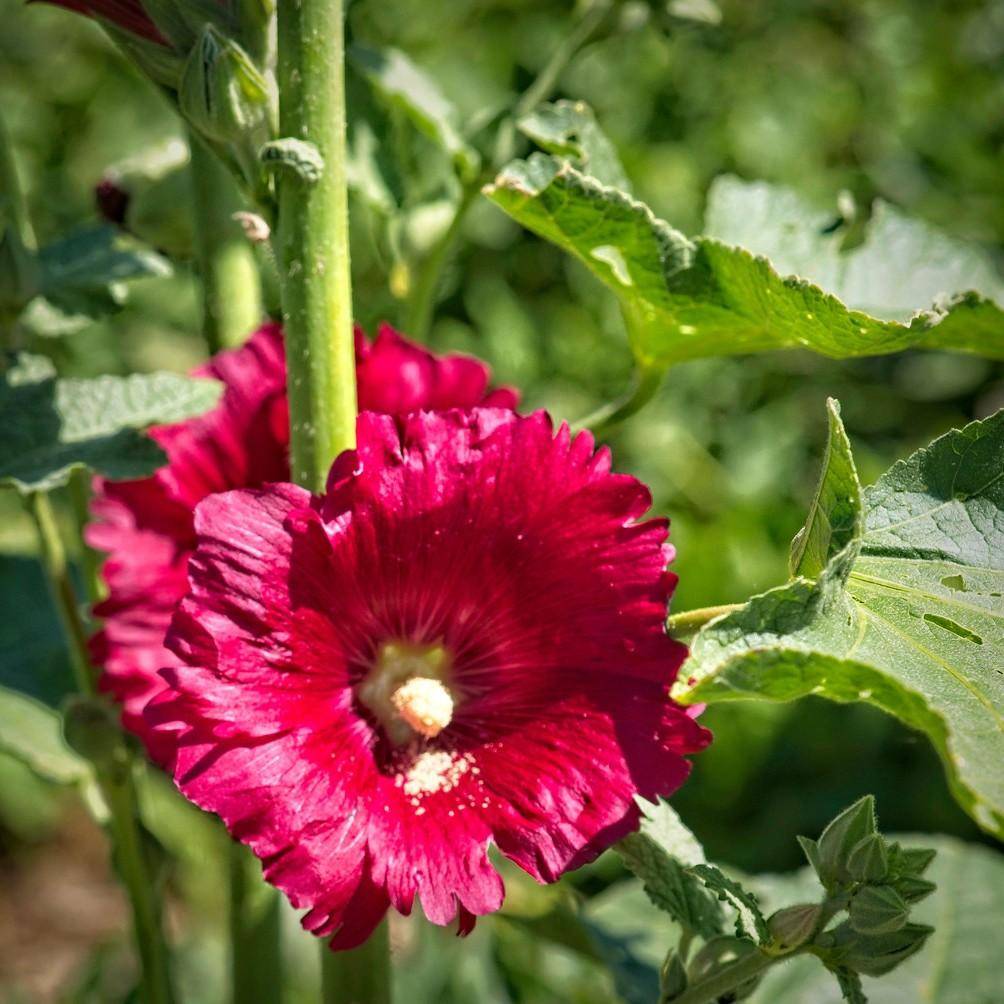
hollyhock
Alcea rosea (single)
Overview
The Hollyhock (Alcea Rosea) is an incredible flower that makes a stunning addition to any garden. With its beautiful, five petal blooms, the plant can reach up to 6 feet in height and can be found in a variety of colors including pink, yellow, white, and purple. The flowers are most often single and tend to be bi-colored with a dark center. Planting this flower in your garden will provide you with a great deal of beauty and contrast as the leaves and flower buds take on a deep purple hue before the blooms appear. Not only are these flowers eye-catching, but they are also highly fragrant, perfect for attracting pollinators to your garden.
Care Guide
Watering
Hollyhock (Alcea rosea (single)) should be watered deeply once a week, providing at least 1 inch of water per week. Water should be applied directly to the soil and ensure that it is able to penetrate down to the roots. During dry periods, you may need to increase watering frequency to twice a week. Avoid overwatering, as it can lead to root rot. Avoid getting the foliage wet, as this can lead to fungal diseases.
Light
Hollyhocks (Alcea rosea (single)) should be planted in a location that receives full sun, meaning at least 6-8 hours of direct sunlight a day. For maximum flowering and health, hollyhocks should receive as much sunlight as possible. When planted in partially shaded areas, hollyhocks will produce fewer flowers and are more prone to disease.
Soil
Humus rich, Well-drained
Temperature
Hardiness zone 2–10.
Pruning
Hollyhock (Alcea rosea (single)) should be pruned twice a year - once in mid-summer after the first flowering period and again in late fall after all blooms have faded. In early summer, when the plant has finished flowering, cut down the stalks to a few inches above the soil level. This will allow the plant to go into dormancy so it can regenerate and start producing new blooms for the following season. Cutting the stalks down to about 1/2 their length in late fall will also help improve air circulation and promote overall health in the plant. For any stems that are looking dead or damaged from pests or disease, they should be pruned further down to the base. This will help minimize the chances of any new diseases or insects attacking the plant in the future.
Propagation
Division, Cutting, Seed Propagation, Layering Propagation
Uses & Symbolism
Attracts: Hummingbirds, Butterflies.
Diseases & Pests
Common pests: Mites, Rust, Rabbit resistant .
Related plants
Other plants you might like if you grow hollyhock.