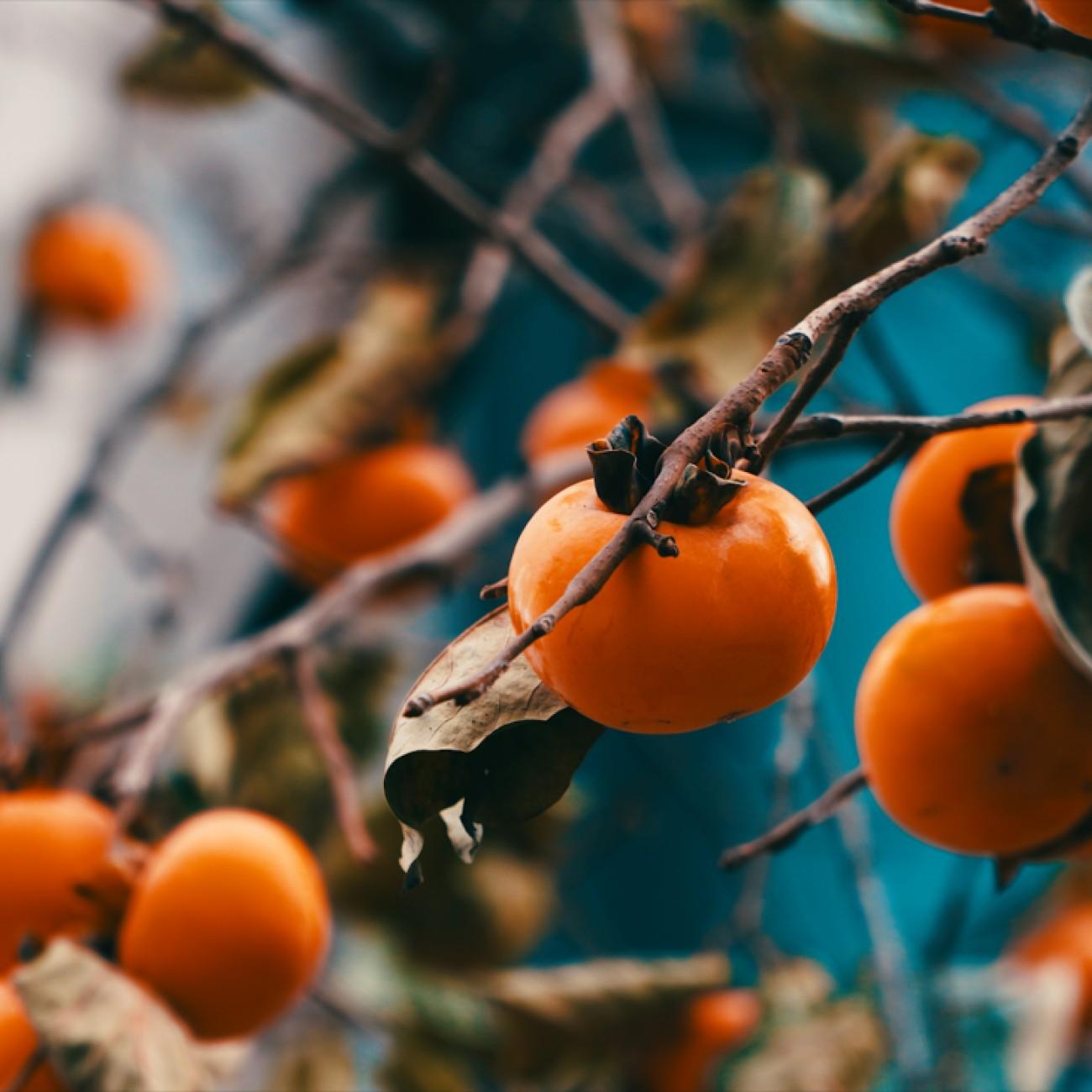
Japanese persimmon
Diospyros kaki 'Dagaishi'
Overview
Japanese persimmon (Diospyros kaki 'Dagaishi') is an amazing species of fruit-bearing tree. It has long been treasured in Japan for its nutritious, sweet fruit with a unique flavor. The tree is handsome and hardy, with dark green leaves and spreading branches. It's easy to care for and requires minimal maintenance. The 'Dagaishi' variety produces particularly large fruits that are exceptionally sweet and juicy, ripening in the fall and withstanding colder temperatures. It's an excellent choice for those looking for both a beautiful garden tree and a source of delicious persimmon fruit.
Care Guide
Watering
Japanese persimmons should receive 1 inch of water per week, either from rainfall or from supplemental irrigation. During the hottest months of the year, persimmons may require more water. When irrigating persimmons, water deeply, but infrequently. Soak the soil until water reaches the roots of the tree. Allow the soil to dry before your next irrigation. During the dormant season, water your persimmon only if the soil is extremely dry.
Light
Japanese Persimmon (Diospyros kaki 'Dagaishi') plants love sunlight! They should be planted in a location that gets plenty of sun each day - around 6 to 8 hours is ideal. For this particular variety, spring and fall are the best seasons for maximum sunlight exposure. During the summer months, the tree should receive morning sunlight with some afternoon shade, as too much direct sunlight during hotter months can burn the leaves. In winter, the Japanese persimmon can withstand partial sunlight or even full sun exposure.
Temperature
Hardiness zone 7–10.
Pruning
Japanese persimmon (Diospyros kaki 'Dagaishi') is best pruned in late winter or early spring while the tree is dormant. Light pruning of young trees can be done in late winter or spring to help promote a strong branching structure. This includes removing diseased, damaged, or deadwood, as well as crossing branches. During the summer, remove any watersprouts or sucker growth. Older trees should be worked in the winter, as this is less stressful on the species. For mature trees, limit pruning to removal of dead, diseased, or crossing branches and thinning out congested sections. Pruning should be done at a moderate level so as to not disrupt the tree’s balance.
Propagation
Air Layering Propagation, Grafting Propagation, Cutting, Seed Propagation
Related plants
Other plants you might like if you grow Japanese persimmon.