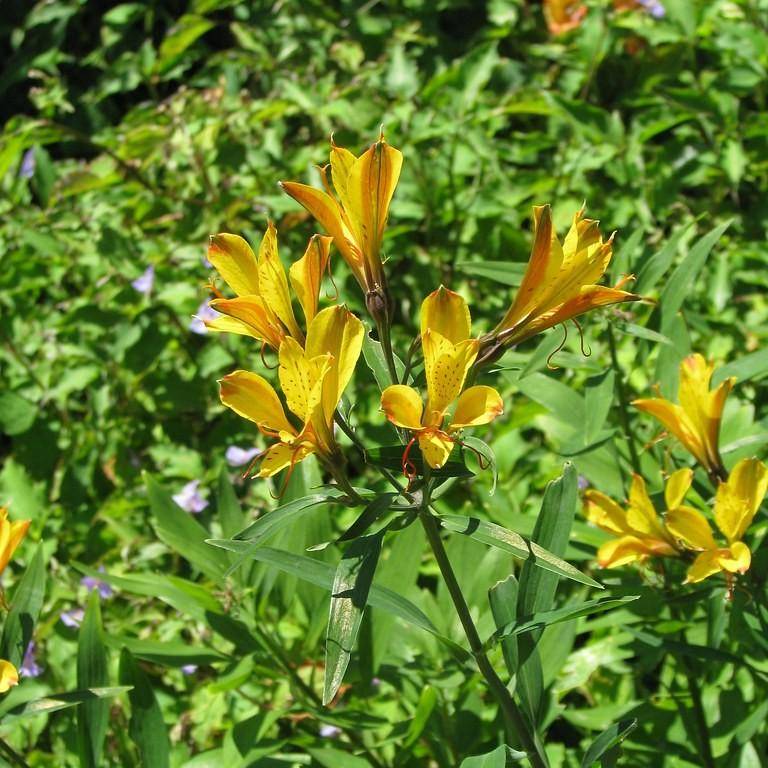
lily of the Incas
Alstroemeria 'Sweet Laura'
Overview
Lily of the Incas (Alstroemeria 'Sweet Laura') is an amazing plant that can bring beauty to your garden. It boasts a rainbow of colors such as red, yellow, and orange, and its trumpet-like flowers have a delicate and pleasant scent. The Sweet Laura variety also lasts longer than other alstroemerias, making it a great choice for an extended floral display. To top it off, its care is quite easy; all it needs is a little pruning and some protection from cold temperatures. If you're looking for an exotic, low-maintenance flower for your garden, the Lily of the Incas is definitely the way to go!
Care Guide
Watering
Lily of the Incas (Alstroemeria 'Sweet Laura') should be watered deeply and slowly to allow ample time for the soil to absorb the water. Water once every 1-2 weeks, or when the top 1 to 2 inches of soil are dry, ensuring the soil is evenly moist. Avoid overwatering, which can lead to root rot, by allowing the plant to almost dry out in between waterings.
Light
Lily of the Incas (Alstroemeria 'Sweet Laura') needs bright, indirect sunlight for optimal growth. This means that the plant should be positioned near a sunny window, but indirect light should filter through a sheer curtain or similar material to avoid spotting or burning of the leaves. The plant should receive at least 6 hours of sunlight per day, and up to 8 hours during the growing season. If the lily of the Incas is positioned where it receives too much direct sunlight, it may start to wilt and show signs of distress.
Temperature
Hardiness zone 5–9.
Pruning
Lily of the Incas (Alstroemeria 'Sweet Laura') should be pruned lightly in late fall or early winter. Heavy pruning should be done in late winter through early spring. Dead and/or damaged branches should be removed first. Then selectively prune out any weaker stems that don't match the desired shape.
Propagation
Division, Cutting, Seed Propagation, Layering Propagation
Related plants
Other plants you might like if you grow lily of the Incas.