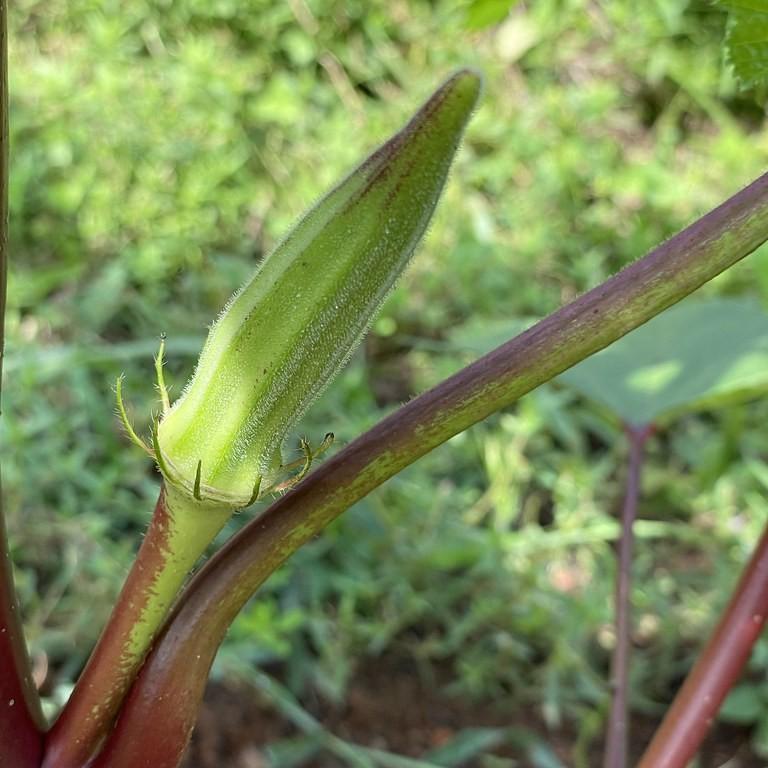
okra
Abelmoschus esculentus 'Baby Bubba'
Overview
Okra, with the scientific name Abelmoschus esculentus 'Baby Bubba', is an amazing plant species that can bring a unique texture and flavor to dishes. Its pods grow quickly, have a superb nutty taste, and are surprisingly tender. They are also extremely versatile, and can be used in a wide variety of recipes such as soups, stews, gumbos, pickles, and even fried. Its thick, slimy texture helps to thicken soups and sauces. Growing okra is easy and can be done in almost any growing region. Its pods are full of antioxidants, vitamins, and minerals, which means that you can enjoy its flavor while getting a healthy boost. Not to mention, its attractive flowers add a decorative element to the garden. There is no doubt why Baby Bubba okra is an amazing plant species.
Care Guide
Watering
Okra should be watered deeply and regularly during the growing season. Aim to give approximately 1 inch of water per week. Water okra in the morning or early evening so that the foliage has time to dry out before nightfall. This prevents fungal diseases. When the plant starts blooming, reduce watering and switch to regularly misting the leaves as flowers may drop if watered too directly. If the soil is dry for a longer period of time, water deeply but infrequently to encourage the roots to grow deeper so that the plant may better access water in the future.
Light
Okra plant species (Abelmoschus esculentus 'Baby Bubba') needs full sun in order to produce its best yield. Direct sunlight should be provided for at least 6 hours a day. Depending on the region and the season, direct sunlight might not be available every day, and partial shade can help prevent excessive heat buildup and protect the plants from too much sun. Placing okra plants where they will receive morning sun and some shade in the afternoon can help sustain healthy yields and reduce the risk of sunburn.
Temperature
Hardiness zone 2–10.
Pruning
Okra (Abelmoschus esculentus 'Baby Bubba') requires minimal pruning. It is recommended to remove spent flowers and seed pods to ensure continued production of new fruiting branches. If the plant grows too large, it can be pruned down to a desired size, but make sure to avoid pruning too early in the season. Pruning should be done in mid to late summer for optimal plant health. Pruning should also be done cautiously to avoid removing too much of the plant, as this may decrease the yield of okra pods.
Propagation
Seed Propagation, Cutting, Layering Propagation, Division, Grafting Propagation
Related plants
Other plants you might like if you grow okra.