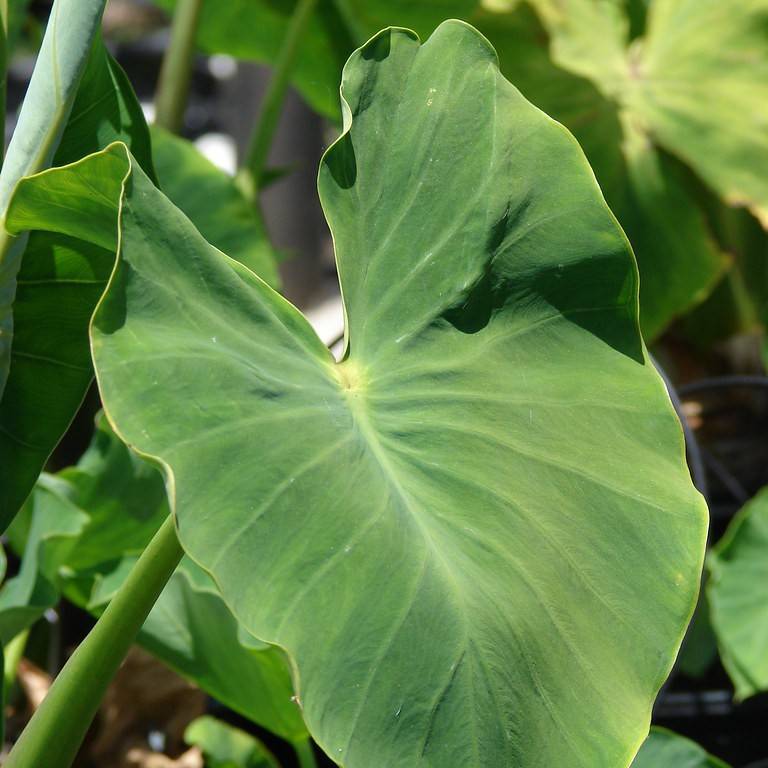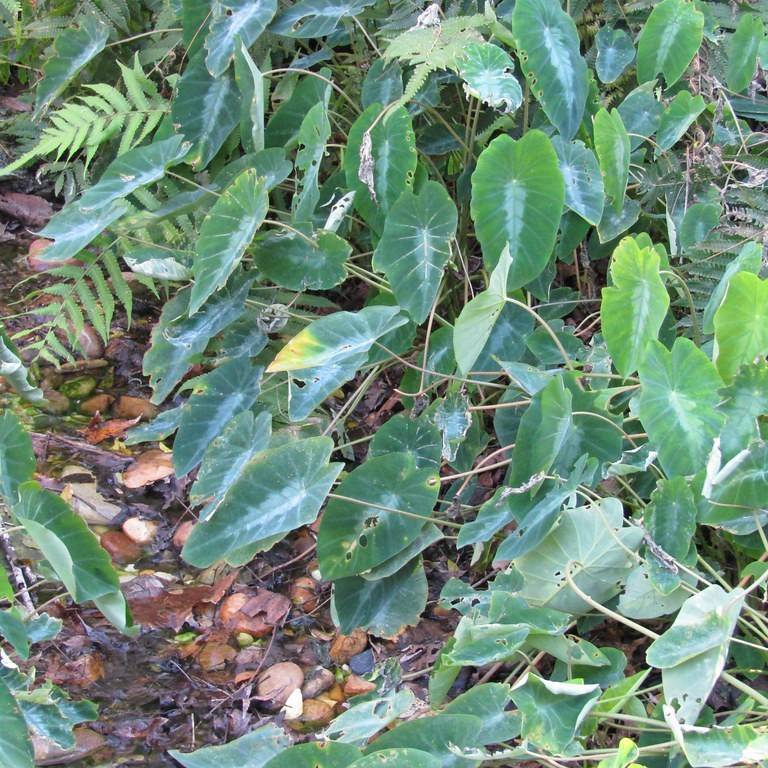
taro
Colocasia fallax
Overview
Taro (Colocasia Fallax) is an amazing plant species! It is not only full of colour, but it is also quite versatile when it comes to use. It is a starchy root vegetable found in Asia, Africa, and the Pacific Islands; rich in vitamins, minerals, and dietary fibre. As a delicacy, taro is boiled, mashed, roasted, or thinly sliced and fried. It is also incredibly resilient and can grow even in low fertility soils! Thanks to its ability to naturally combat pest infestations, its properties as a companion plant, and its remarkable drought resilience, taro is a reliable and amazing crop plant, invaluable to any garden.
Care Guide
Watering
Taro plants need to be watered frequently and consistently to ensure the best growth. Watering should be done 2 to 3 times a week, enough to keep the soil moist to the touch but not so much that water pools on the surface or runs off. During hot weather, taro plants may need to be watered more often. In the winter months, water less frequently and thoroughly drench the soil with water. Make sure the soil is well draining, as taro plants' roots can rot in overly wet or soggy soil. Allow the soil to dry out a bit between watering sessions.
Light
Taro (Colocasia fallax) requires medium to high light, with full sun best for plant growth. For optimal growth, the plant will need at least 4-6 hours of direct sunlight a day and 8-10 hours of indirect light. When growing in indoor conditions, the plant will need to be placed in locations near windows.
Temperature
Hardiness zone 8–10.
Pruning
Taro (Colocasia fallax) plants should be pruned in the spring, just before new growth begins. Depending on the size of the plant, pruning should take place between 1/3 to 2/3 of the entire plant, leaving enough to allow for new growth. It is not necessary to prune taro on a regular basis, although if pruning is done, it should naturally balance out the shape and size of the plant. Remove foliages by cutting directly on the base of the plant.
Propagation
Cormlet Propagation, Cormlet Propagation, Tissue Culture, Air Layering Propagation, Stem Propagation, Seed Propagation
Related plants
Other plants you might like if you grow taro.