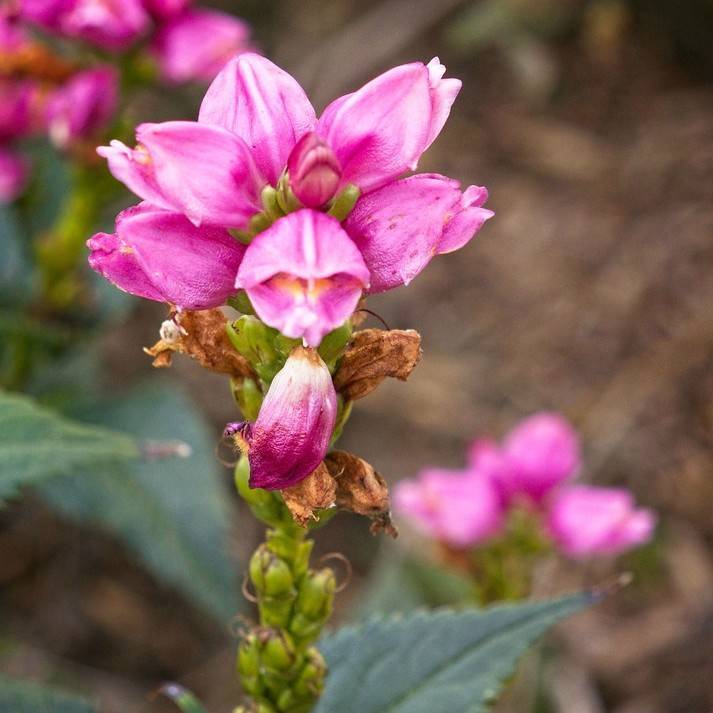
turtlehead
Chelone obliqua 'Ieniemienie'
Overview
Turtlehead (Chelone obliqua 'Ieniemienie') is an amazing plant because it produces an incredibly beautiful flower that looks just like a turtle’s head. This unique feature makes Turtlehead a conversation starter in the garden and a real eye-catcher to passersby. The heirloom plant's long blooming season from mid-summer to late autumn means that it's guaranteed to last throughout the summer, adding a vibrant flourish of colour to any garden. Turtlehead's ease-of-care requirements makes it the perfect addition to any garden, regardless of gardening experience. Plus, its bright purple blooms make it a great source of nectar for pollinators.
Care Guide
Watering
Turtlehead (Chelone obliqua 'Ieniemienie') prefers moist but not overly wet and boggy soils, so water with a generous amount (about 1 inch) weekly during the growing season. Decrease watering to about every 10-14 days in the fall season. Provide supplemental irrigation during summer if rainfall is deficient. For best growth and flower production, water deeply twice a week. Be sure to water the soil, not the foliage. Excess water on plant foliage may cause leaf spot and other diseases.
Light
Turtlehead (Chelone obliqua ‘Ieniemienie’) is a plant species that requires lots of sunlight in order to reach its best potential. The plant should get at least 5-6 hours of direct sun per day, preferably during the morning and earlier afternoon hours, but some amount of indirect sunlight throughout the day is beneficial as well. Turtlehead does best in full sun to partial shade, but if it receives too much shade, it may not grow as healthy or flower as well. It is important to provide Turtlehead with the right balance of sunlight throughout the day, which will help to ensure its health and aesthetic appeal.
Temperature
Hardiness zone 5–9.
Pruning
It is best to prune Turtlehead (Chelone obliqua 'Ieniemienie') in the spring when the new growth is just beginning. The amount to prune will depend on the size and shape of the desired plant and how much new growth has already occurred. However, generally, it is wise to remove no more than a third of the plant’s height. It is also important to remember to sterilize your pruning tools before and after use to reduce the risk of spread of disease. Additionally, it is recommended to cut back dead, diseased, or damaged stems or branches.
Propagation
Division, Cutting, Seed Propagation, Layering Propagation
Related plants
Other plants you might like if you grow turtlehead.