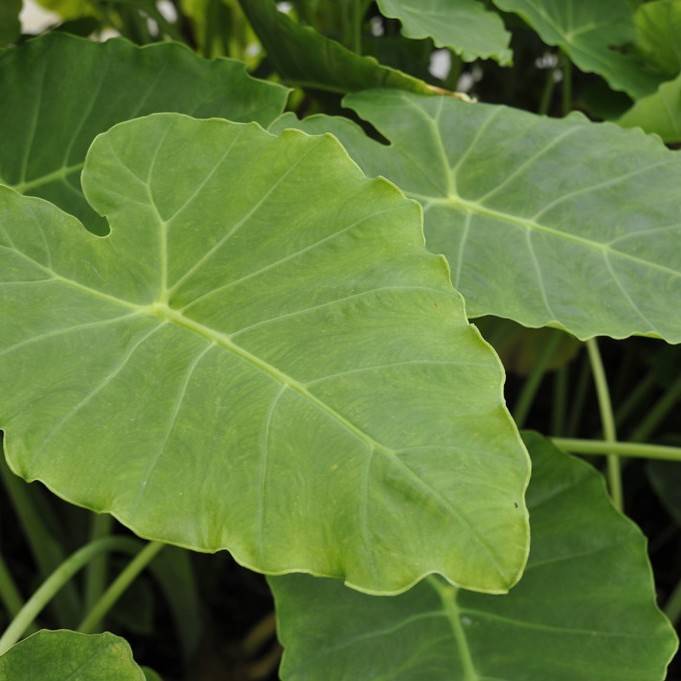
giant elephant's ear
Colocasia gigantea
Overview
Giant elephant's ear (Colocasia gigantea) is an amazing plant, perfect to add to your garden for a bit of tropical flair. This giant foliage plant can grow to a whopping 8-10 feet tall with huge, heart-shaped leaves reaching up to 3 feet in size. It boasts an impressive, bold pattern of colors that is sure to turn heads. Not only is it great for making a dramatic statement in the garden but it is also low maintenance and easy to grow. This versatile plant loves both full sun and partial shade and prefers moist soil and warm temperatures. So if you’re looking to add a unique showstopper to your garden, look no further than giant elephant's ear.
Care Guide
Watering
Giant elephant's ear (Colocasia gigantea) should be watered once or twice per week, depending on your climate. During the summer months, when temperatures are high and sunlight is plentiful, you should water more frequently, around 3 times a week. In the cooler months, when temperatures are lower and there is less sunlight, you can water less frequently, around once a week. When you water, make sure the soil is evenly moist but not soggy, as too much moisture can lead to root rot. Depending on the size of your plant, you may need to give it a deep soak. Once every 2 to 4 weeks, you should let the top 2-4 inches of the soil dry before you water again.
Light
The giant elephant's ear plant needs at least 5 to 6 hours of direct sunlight each day. For optimum growth, it should receive a minimum of 8 hours of direct sunlight daily. This plant can tolerate some shade, but will not thrive in full shade, and may begin showing signs of decline if it does not get enough sunlight.
Temperature
Hardiness zone 8–10.
Pruning
Giant elephant's ear should be pruned in late winter or early spring, before new growth begins. Prune back faded leaves to the crown of the plant, and any dead or damaged foliage. Remove about 1-third of the oldest, tallest leaves, cutting them off at or near the base. Prune only as much as is necessary for the desired size and shape of the plant. In early to mid-summer, allow some of the new growth to extend beyond the base of the plant, but prune back the long growth at the end of the season. This will help ensure that the plant maintains a more compact size.
Propagation
Division, Offsets, Air Layering Propagation, Stem Propagation, Seed Propagation
Guides that mention giant elephant's ear
Related plants
Other plants you might like if you grow giant elephant's ear.