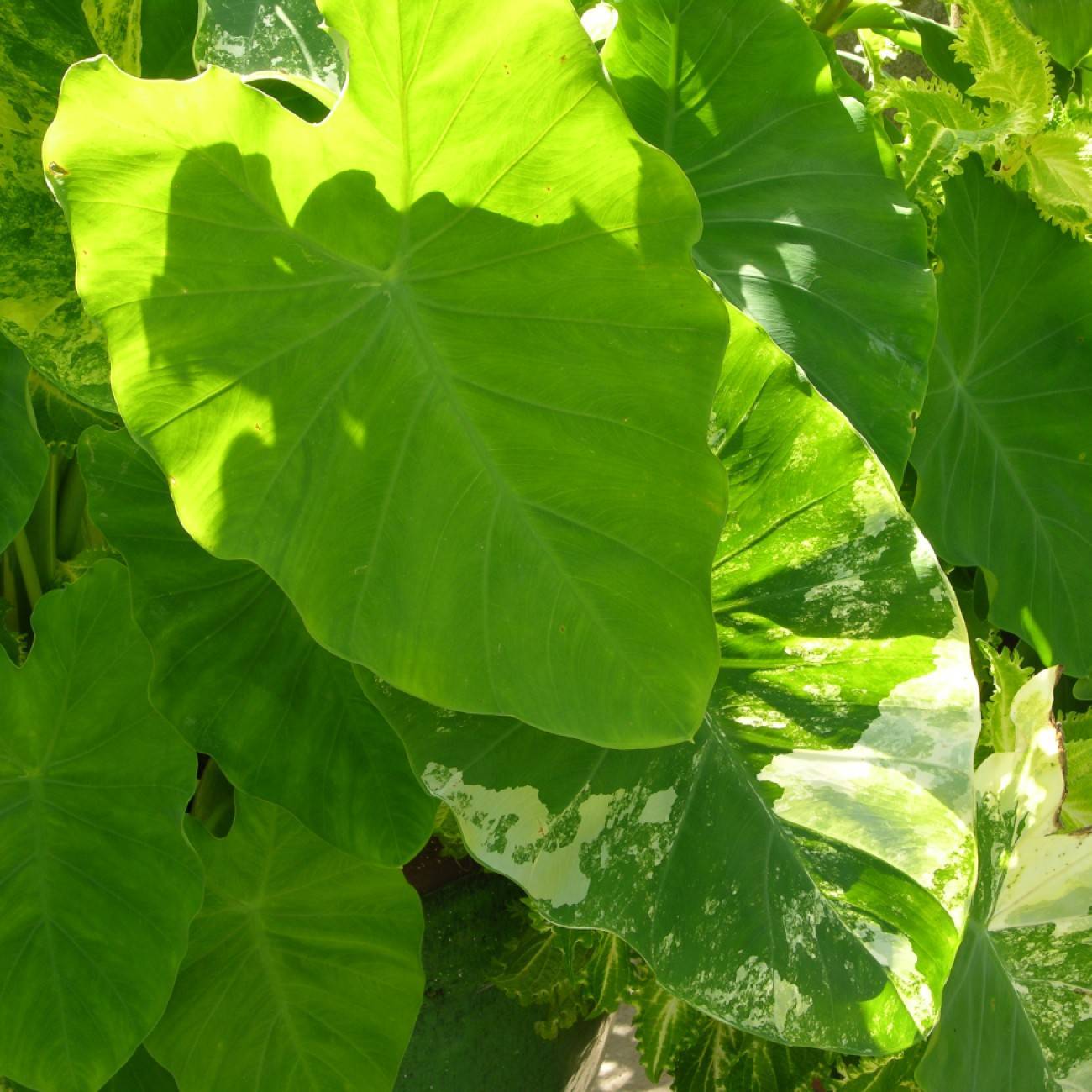
taro
Colocasia esculenta 'Elena'
Overview
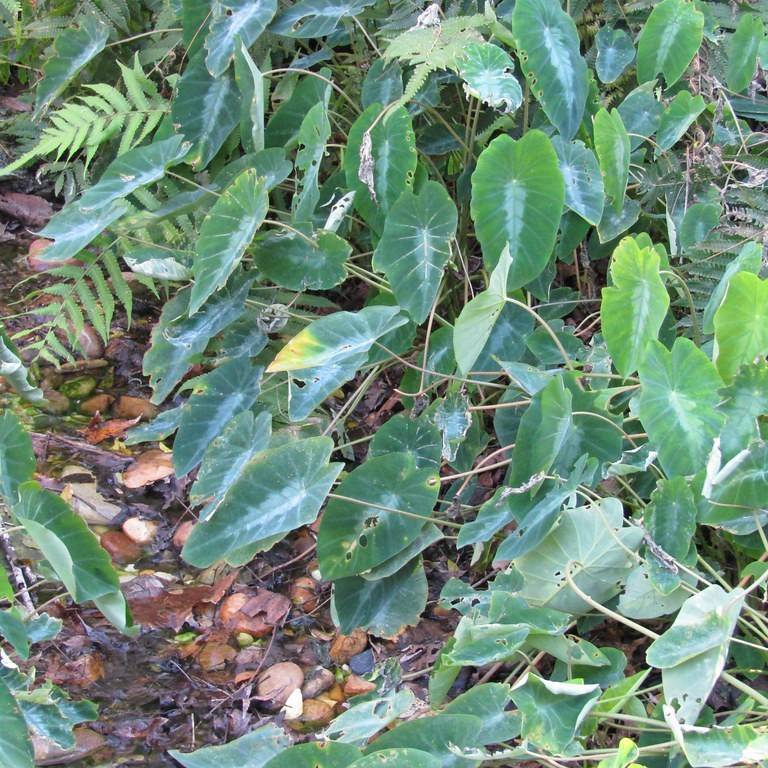
The Taro (Colocasia esculenta 'Elena') is an amazing tropical plant. With its dark green shiny leaves and unique bumpy stems, it is sure to bring a tropical vibe to any home. The thick foliage can tolerate a wide range of temperatures and loves humidity, meaning it's easy to grow indoors or out. It's a great plant for adding texture to a room, and can grow to over 3 feet tall. Plus it's edible – its flavorful Mayan-originated roots are used in cuisines around the world. Whether its grown for its looks or its nutrition – the Taro is an amazing plant.
Care Guide
Watering
Taro (Colocasia esculenta 'Elena') should be watered deeply 1 to 2 times per week, depending on the heat and humidity. Generally, taro plants require about 1 to 2 inches of water per week. Make sure to water the soil until it is moist but not soggy. In hot and dry climates, more frequent watering may be necessary. Allow the soil to dry out a bit in between waterings so that the taro does not get overwatered and develop root rot.
Light
Taro (Colocasia esculenta 'Elena') prefers full sunlight for 5 to 6 hours per day. This may be in the morning or in the afternoon. It is important to ensure that the sunlight is not too direct for the plant as it may cause burning. In temperate climates, it is best to provide with partial shade during the hottest hours of the day, especially during the summertime. Overall, providing plenty of sunshine is essential to its growth and health, and should be provided accordingly.
Soil
Acidic, Bog, Humus rich
Temperature
Hardiness zone 8–10.
Pruning
Taro should be pruned once or twice a year, around early spring and late summer. When pruning, be sure to remove any dead, damaged, or diseased stems and leaves. Pruning should be done carefully in order to retain the natural shape of the plant. Cut away any crowded growth to encourage good air circulation throughout the plant. Be sure to cut back stems and shoots close to the main stem or trunk so that its shape is maintained. It is also important to remove any flowers or buds that may form, as this can cause the plant to expend its energy on producing more flowers instead of promoting overall growth. For a more uniform look, prune each stem or shoot to the same length.
Propagation
Division
Diseases & Pests
Common pests: Mites, Root rot, Virus, Pest resistant, Disease resistant .
Related plants
Other plants you might like if you grow taro.