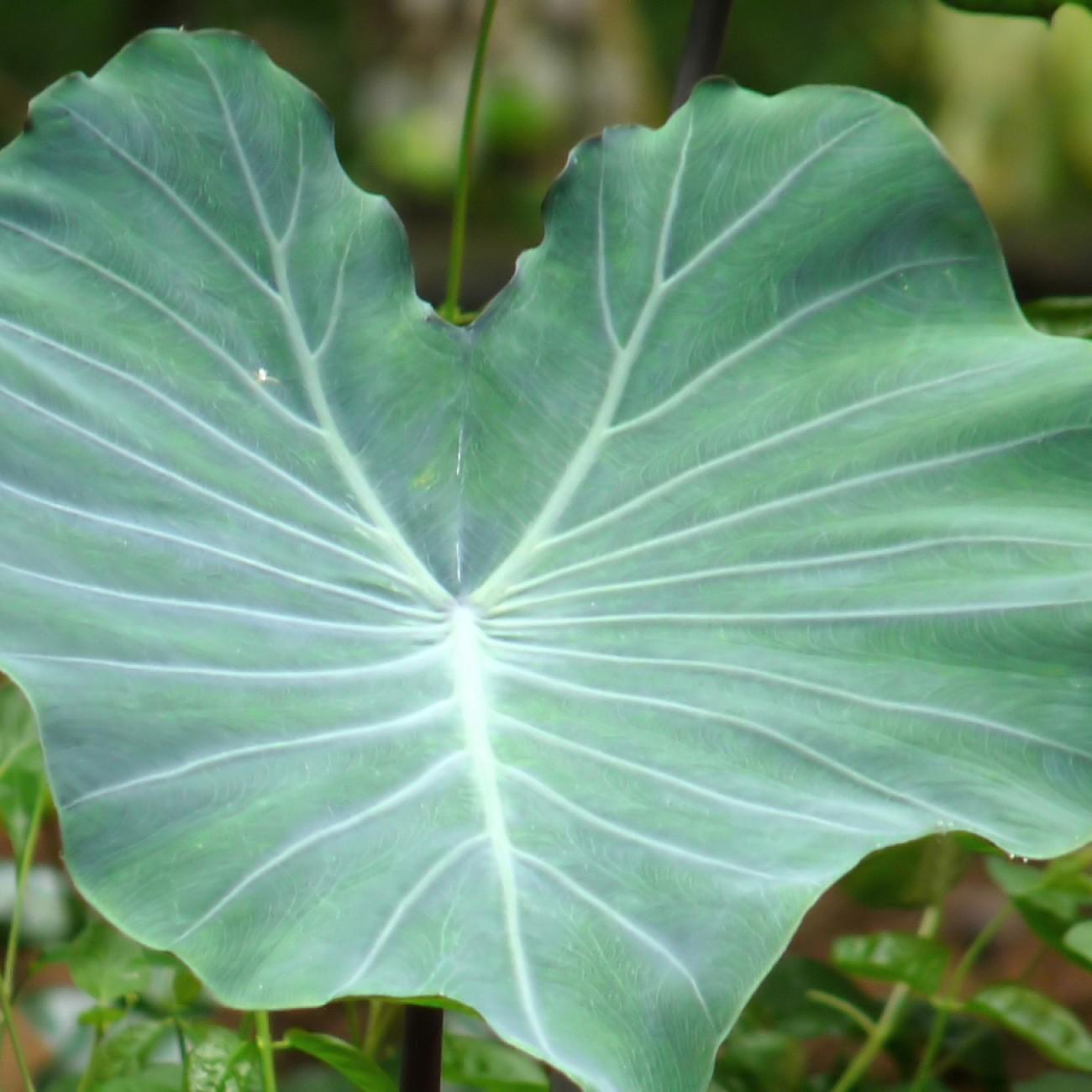
taro
Colocasia esculenta (vegetable group)
Overview
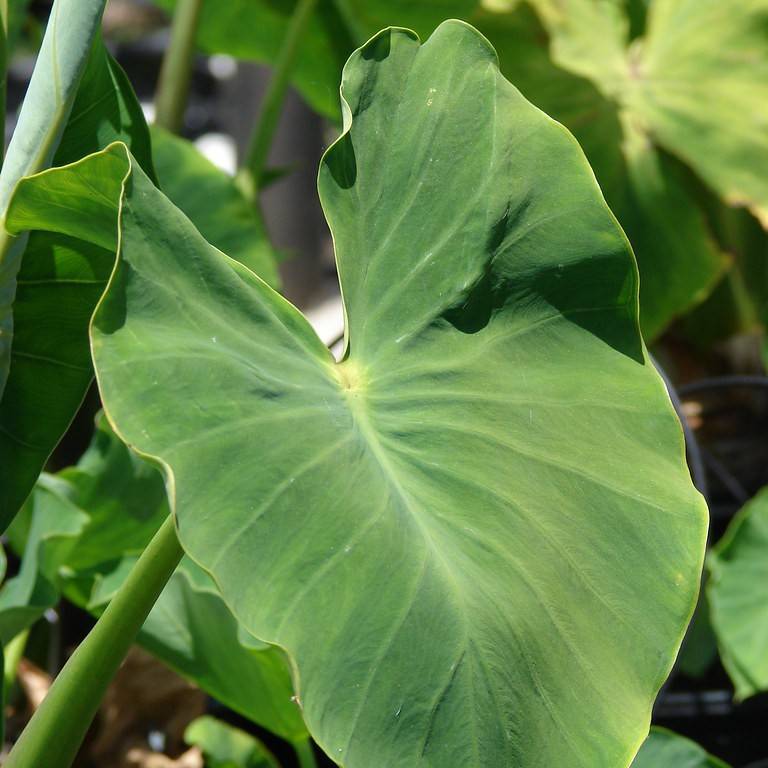
Taro, or Colocasia esculenta, is an amazing vegetable species. Its large edible tubers grow best in moist, tropical or subtropical environments, and have a unique flavor and texture. It is a versatile crop used for stews, roasts, salads, desserts, and even beverages. Its starchy content is high in carbohydrates and fiber, making it nutritious to eat. Not only is it nutritional, but taro is also rich in Vitamin C and anti-oxidants, aiding in immunity and digestive health. Taro is a popular plant to cultivate because of its high yield and hardiness, so it is ideal for growing on a small or large scale. Its stalks and leaves are also edible! All in all, taro is a wonderful vegetable dietary staple, lending itself to a variety of dishes that are sure to tantalize the taste buds!
Care Guide
Watering
Taro (Colocasia esculenta) must be kept moist and should be watered at least twice a week, or more frequently if the soil starts to become dry. Make sure to water around the root system and not over the foliage to help avoid fungal diseases. During the growing season, you may want to increase the frequency of watering to ensure that the plant has a constant, ample supply of moisture.
Light
Taro (Colocasia esculenta) requires full sunlight for 6 to 8 hours per day. It is best to keep the plant as close to a window as possible to ensure that it is receiving the optimum amount of light. In addition, if planting outdoors, it is recommended to provide shade during the hottest hours of the day from direct sunlight. Too much sun will cause the leaves to become sunburnt and significantly reduce the yield and harvest of the crop.
Soil
Acidic, Bog, Humus rich
Temperature
Hardiness zone 8–10.
Pruning
Pruning is an important part of providing optimum care for taro plants. For best results, prune taro plants during times of active growth. Prune off dead and diseased leaves, stems and flower stalks when they are visible. This can be done any time throughout the year. Prune back the foliage to maintain a reasonably open crown shape in the center. Use sharp pruning blades or scissors to make clean cuts. Prune off the tips of overgrown or leggy canes when they reach more than 3 feet in height. This will help encourage bushier growth and overall shape. Prune off the lowest leaves on the stem of the taro plant in late winter to early spring to reduce possible disease and pest problems. Prune more severely if the plant is large and overgrown. Remove up to 1-third of the foliage at a time, pruning away the tallest pieces first. With taro plants, aim to keep the foliage within 2-3 feet in height.
Propagation
Division
Diseases & Pests
Common pests: Mites, Root rot, Virus, Pest resistant, Disease resistant .
Related plants
Other plants you might like if you grow taro.