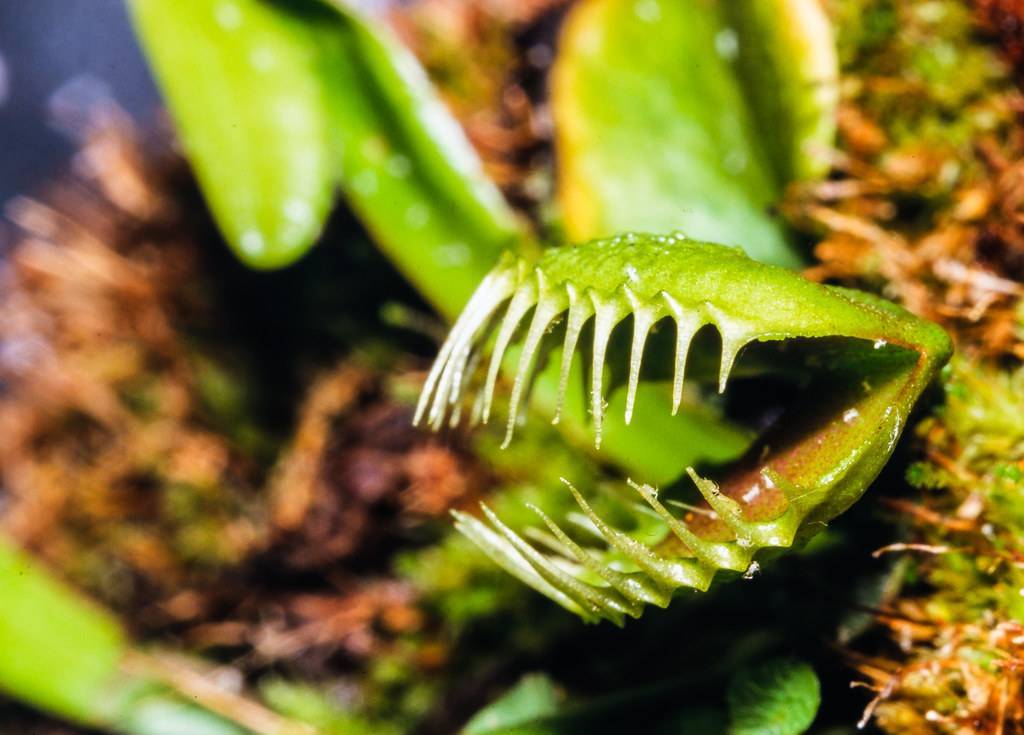
Venus fly trap
Dionaea muscipula 'Cup-shaped'
Overview
The Venus fly trap (Dionaea muscipula 'Cup-shaped') is an incredible plant species that is sure to captivate the eye in any garden. These fascinating plants have the unique ability to catch and digest insects, making them a perfect addition to any insect-infested garden. The leafy structure with its ‘teeth’-like structure that closes up when an insect lands on it is amazing to watch. It takes seconds for these plants to catch its prey and the nutrient-filled, digestive juices released to digest the insect. Its bright, red and green color make it an eye-catching piece of greenery that will be sure to turn heads.
Care Guide
Watering
The Venus flytrap should be watered sparingly, about once every 2 to 3 weeks. However, during periods of dormancy (usually during the colder months), watering should be reduced even further. The best way to water the Venus flytrap is to soak the soil evenly with room temperature distilled water, being careful not to over-saturate it. Venus flytraps prefer to have very moist soil; however, be careful not to let the plant sit in water as this will cause it to rot. The Venus flytrap should not be watered with tap water or soft water (anything containing salts) because the salts may cause irritation to the plant.
Light
For optimal growth and health, Venus fly traps (Dionaea muscipula 'Cup-shaped') should be exposed to at least 6 hours of direct sunlight per day. Ideally, the plants should be positioned in a south-facing spot that receives full sun from 10:00 am to 4:00 pm. If this is not possible, consider supplementing the natural light supply with artificial light. Make sure that the light is positioned close enough to the plant to ensure adequate exposure.
Temperature
Hardiness zone 5–8.
Pruning
It is recommended to prune a Venus fly trap (Dionaea muscipula 'Cup-shaped') twice a year: once in early spring and once in the fall. The amount of pruning depends on the individual plant and the desired shape and size of the plant. Generally, the goal is to keep the plant around 12 inches in height with an even spread of foliage so it is best to err on the side of caution and remove only a few leaves at a time. However, if the goal is to contain the size of the plant, larger pruning more than twice a year may be necessary. If looking to propagate the plant, some sources suggest taking 3-5 leaves off at a time, but never more than half of the total leaves of the plant.
Propagation
Division, Seed Propagation, Leaf Cutting, Root Cutting
Related plants
Other plants you might like if you grow Venus fly trap.