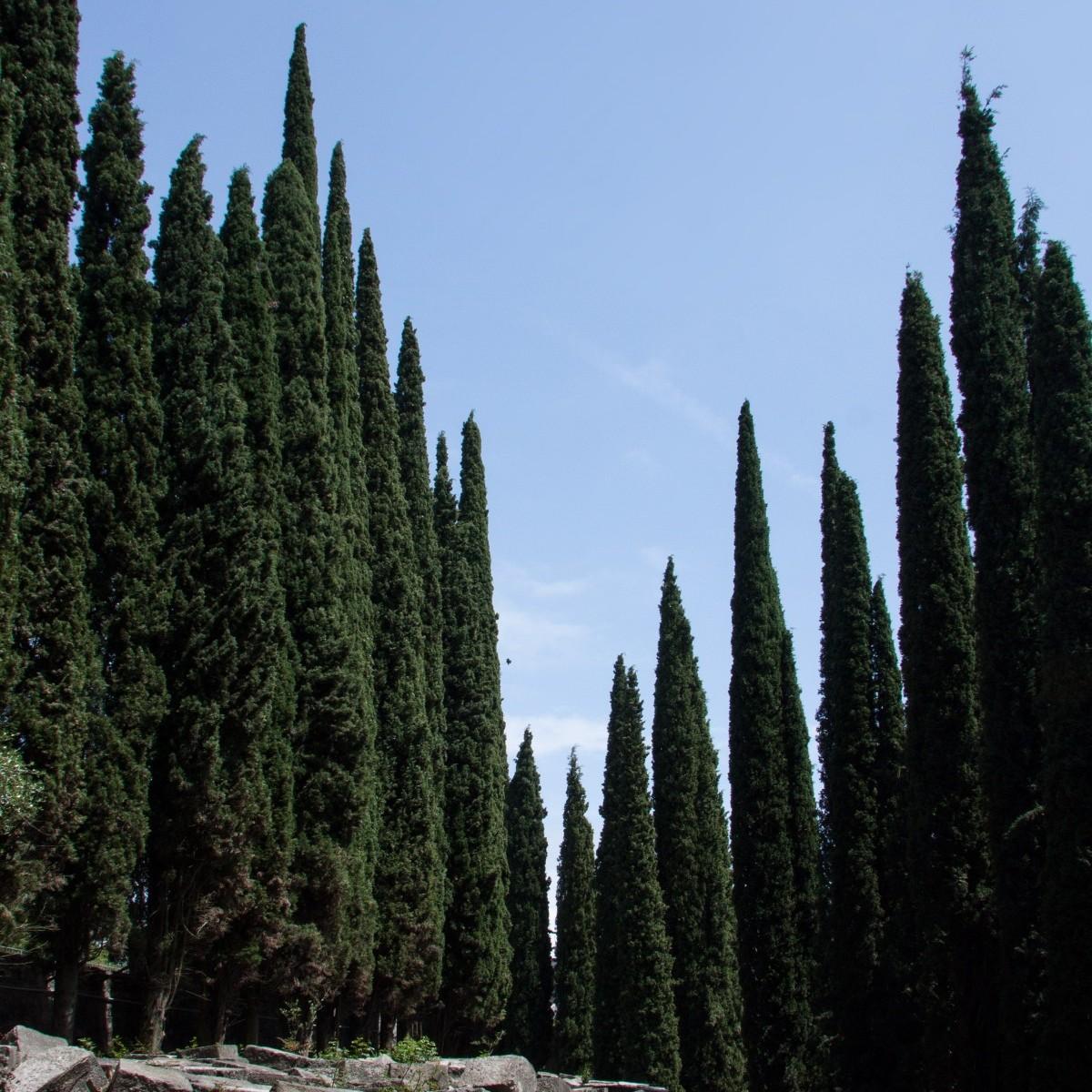
Italian cypress
Cupressus sempervirens subsp. dupreziana
Overview
The Italian cypress (Cupressus sempervirens subsp. dupreziana) is an amazing plant species. Its symmetrical shape and powerful needle-like foliage make it an attractive choice for landscaping. It is a slow-growing evergreen conifer so will last for many years in the garden. It also has the added benefit of providing a windbreak and privacy. The deep green leaves will provide a stunning contrast against other plants, ensuring a visually pleasing display. This species is also tolerant of air pollution, making it a great choice for landscaping in cities and towns. Overall, the Italian cypress is an excellent choice for any garden.
Care Guide
Watering
Italian cypress can be watered every 2 to 3 weeks, depending on the time of year. During hot summer months, it is important to provide Italian cypress with adequate amounts of water. During these months, it can be watered 1 to 2 times per week. Allow the soil to dry out between watering. It is also important to avoid over-watering the plant, as this can cause the plant’s roots to rot.
Light
Italian cypress, (Cupressus sempervirens subsp. dupreziana), requires full sun to thrive. It should be planted in an area that receives at least 6 to 8 hours of direct sunlight each day in order to produce vibrant foliage and a healthy root system. It can tolerate partial shade, especially during the hottest parts of the day, but should not be planted in heavily shaded locations. During the summer months, make sure the Italian cypress receives the majority of its sunlight in the morning and late afternoon hours for best results.
Temperature
Hardiness zone 7–10.
Pruning
Italian cypress (Cupressus sempervirens subsp. dupreziana) can be pruned in late winter or early spring. Pruning should be done sparingly and should involve removal of dead, damaged, or unsightly parts of the plant. If necessary, it is possible to reduce the overall height and width of the plant by pruning back overgrown branches. This should be done gradually and evenly over time in order to maintain the desired shape, size, or form. If pruning is done too severely, it can cause stress to the tree and can lead to damage. To prevent this, ensure that only a small portion of the overall foliage is removed each year. Properly pruned, the Italian cypress will maintain its classical shape and form and will always be an eye-catching addition to any landscape.
Propagation
Cutting, Grafting Propagation, Layering Propagation, Air Layering Propagation, Seed Propagation
Related plants
Other plants you might like if you grow Italian cypress.