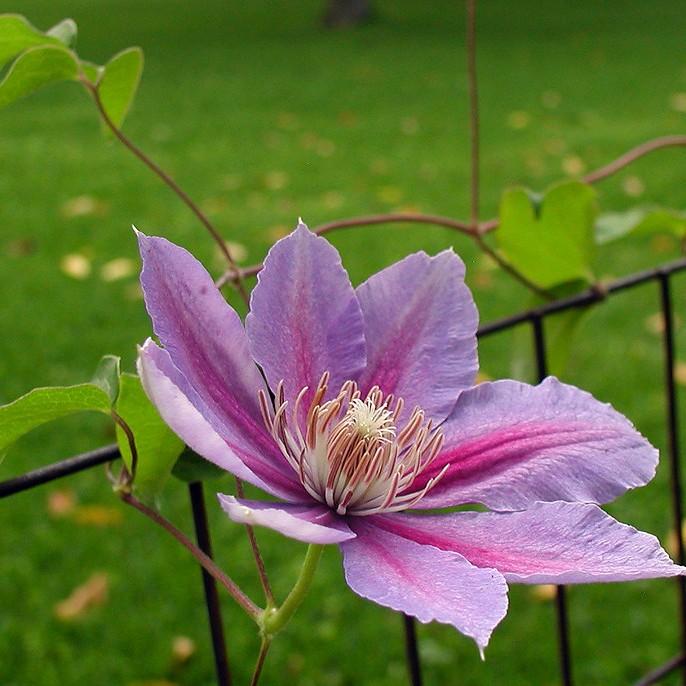
clematis
Clematis 'Fireworks'
Overview
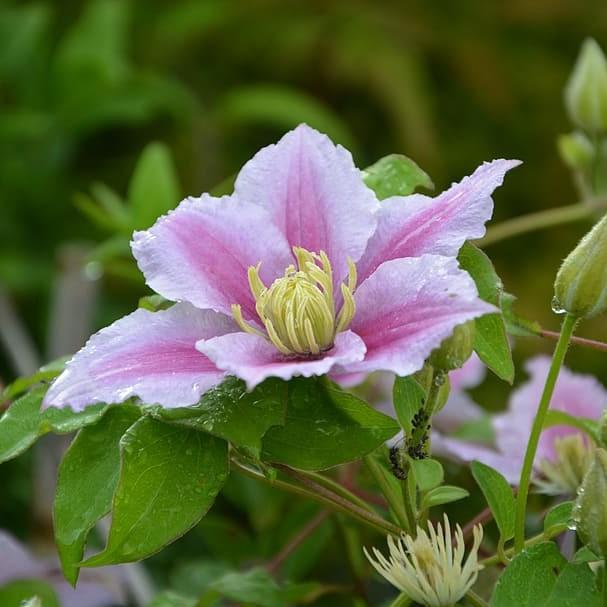
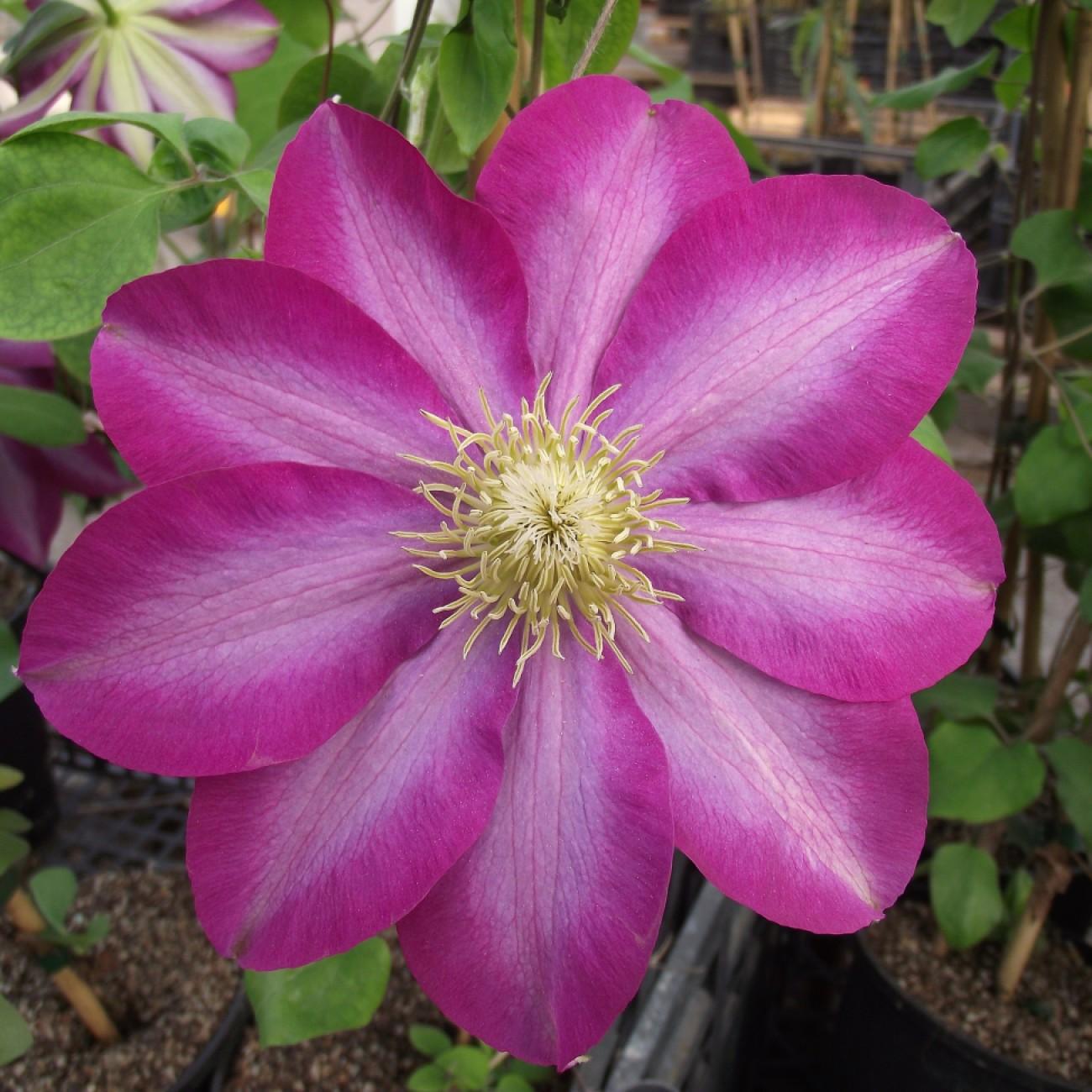
Clematis Fireworks is an amazing plant species. It has masses of large, star-shaped, light pink flowers with flaming red edges. Its flowers will cover your garden in an explosion of color, transforming it into a vibrant and eye-catching display. The blooms last from summer into autumn, so they will brighten your garden for months. Fireworks clematis is also a fast-growing climber, and it will liven up walls, fences and trellises with its vibrant displays. It's a hardy, easy-to-grow species and will thrive in sunny or partially shady positions, providing you with a great show with very little effort.
Care Guide
Watering
For best results, clematis should be watered deeply and regularly. Water newly planted clematis about once a week for the first season. Once established, it should be watered during dry spells, unless there is a period of consistent rain. With established plants, a deep watering once a week should keep them looking lively and lush, depending on the temperatures and rainfall. Water at the base of the plants, avoiding the foliage and leaves, as to prevent the plant from getting mildew or fungal diseases.
Light
When it comes to sunlight, Clematis 'Fireworks' thrives in full sun to partial shade. During the hottest summer days, some afternoon shade may be necessary to protect the plant from heat stress. For optimal health, the clematis should receive at least 6 hours of direct sunlight each day. In the winter months, however, the amount of light can be reduced to 4-5 hours per day. This will help ensure that the clematis is able to enter its blooming dormant state.
Temperature
Hardiness zone 4–8.
Pruning
Prune clematis (Clematis 'Fireworks') annually in late winter or early spring. Pruning for this clematis should not go into summer as this can discourage blooming. Prune 1-third to 1-half of the oldest stems each year, cutting just above a pair of healthy buds. Stems should be cut no higher than 30 cm from the ground. This plant does not require significant pruning, but dead head wilted blooms to avoid self-seeding.
Propagation
Layering Propagation, Cutting, Division, Grafting Propagation
Related plants
Other plants you might like if you grow clematis.