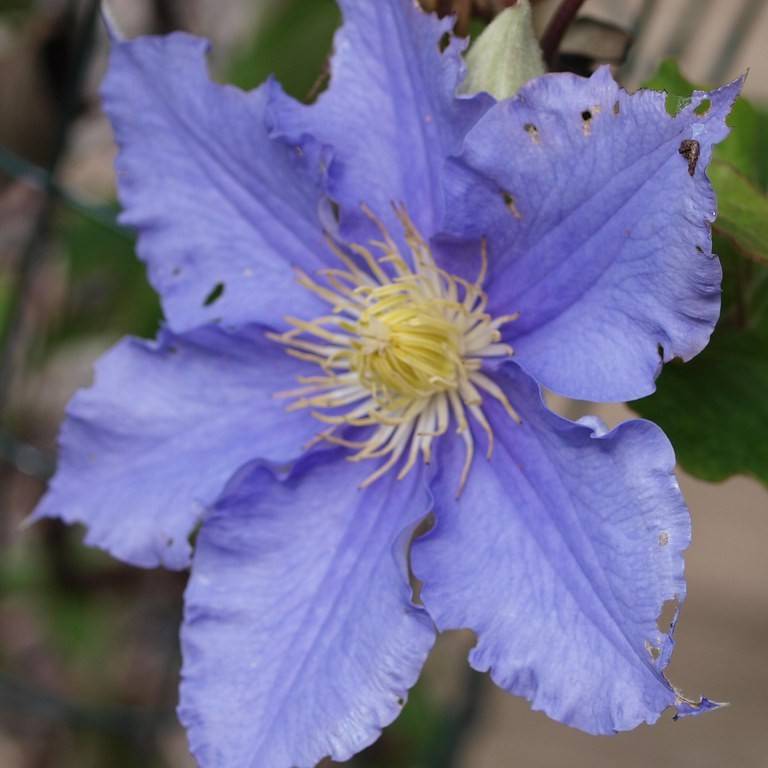
clematis
Clematis 'Will Goodwin'
Overview
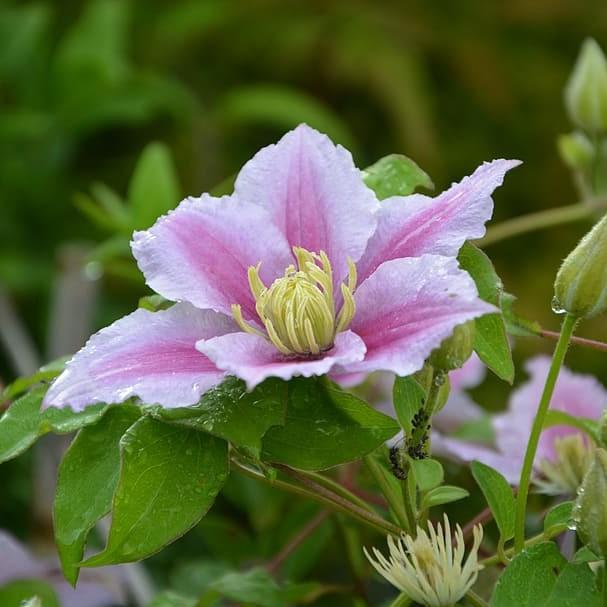
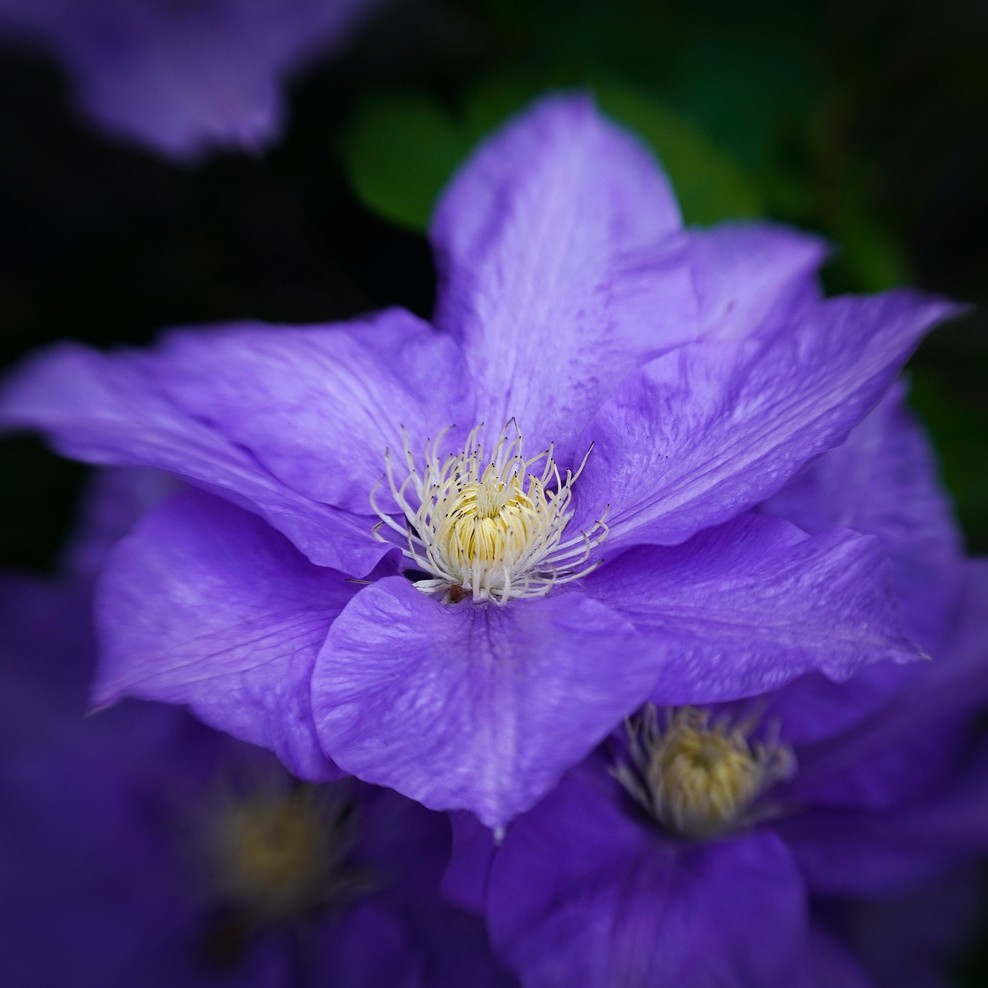
The Clematis 'Will Goodwin' is an amazing plant species due to its bright blooms and height that can reach up to 6 feet when in full growth. Its flowers are a deep purple with a hint of white and are quite large, around 3 to 4 inches in diameter. It blooms in late spring through summer and is one of the first plants to bloom in the garden, giving the garden an early show of color. Its lacy foliage is a wonderful contrast to the tall stems and big blooms making it an attractive and serene addition to any garden.
Care Guide
Watering
Water clematis (Clematis 'Will Goodwin') plants deeply once every 7-10 days to keep the soil evenly moist. Do not allow the soil to dry out completely between waterings. Begin by providing 1 inch of water. As the plant becomes established, increase waterings up to 3-4 inches. If heavy rainfall is not an option, supplement watering with a low-pressure sprinkler or system of soaker hoses. Spread a 2-3 inch layer of wood chip or bark mulch around the base of your clematis to help retain moisture and reduce the need for regular watering. During periods of drought, you may need to increase your watering frequency.
Light
Clematis 'Will Goodwin' is a perennial climbing vine that prefers to grow in full sun for most of the day. For best blooming, this clematis should receive at least 6 hours of direct sunlight every day, preferably during the morning and early afternoon hours. However, too much sun exposure may cause the plant to wilt. It should be kept in an area that receives mostly full sun but with some afternoon shade.
Temperature
Hardiness zone 4–8.
Pruning
When pruning a Clematis 'Will Goodwin' plant, it's important to get the timing right. Pruning should be done in late winter when the weather is still cold and before the new growth appears. The amount of pruning will differ depending on the age of the plant. Younger plants will usually require more pruning than older ones. For the first few years, cut back all of the stems to encourage a strong, dense framework of branches. Cut back each stem to a pair of healthy buds 8 to 10 inches from the ground. This encourages outward and upward growth. After the first few years, prune each stem to a pair of buds at least 2 feet from the ground. This will enable the plant’s branches to form strong, sturdy stems that will support heavy blooms. Prune the top of the plant more heavily to encourage a rounded shape. After the plant is established, start pruning it to contain its size and promote vigorous flowering. This can be done in late winter when the weather is still cold and before the new growth appears. Consider removing up to 1-third of the stems each year. This will remove some of the oldest, less productive stems and encourage the production of strong, new growth.
Propagation
Layering Propagation, Cutting, Division, Grafting Propagation
Related plants
Other plants you might like if you grow clematis.