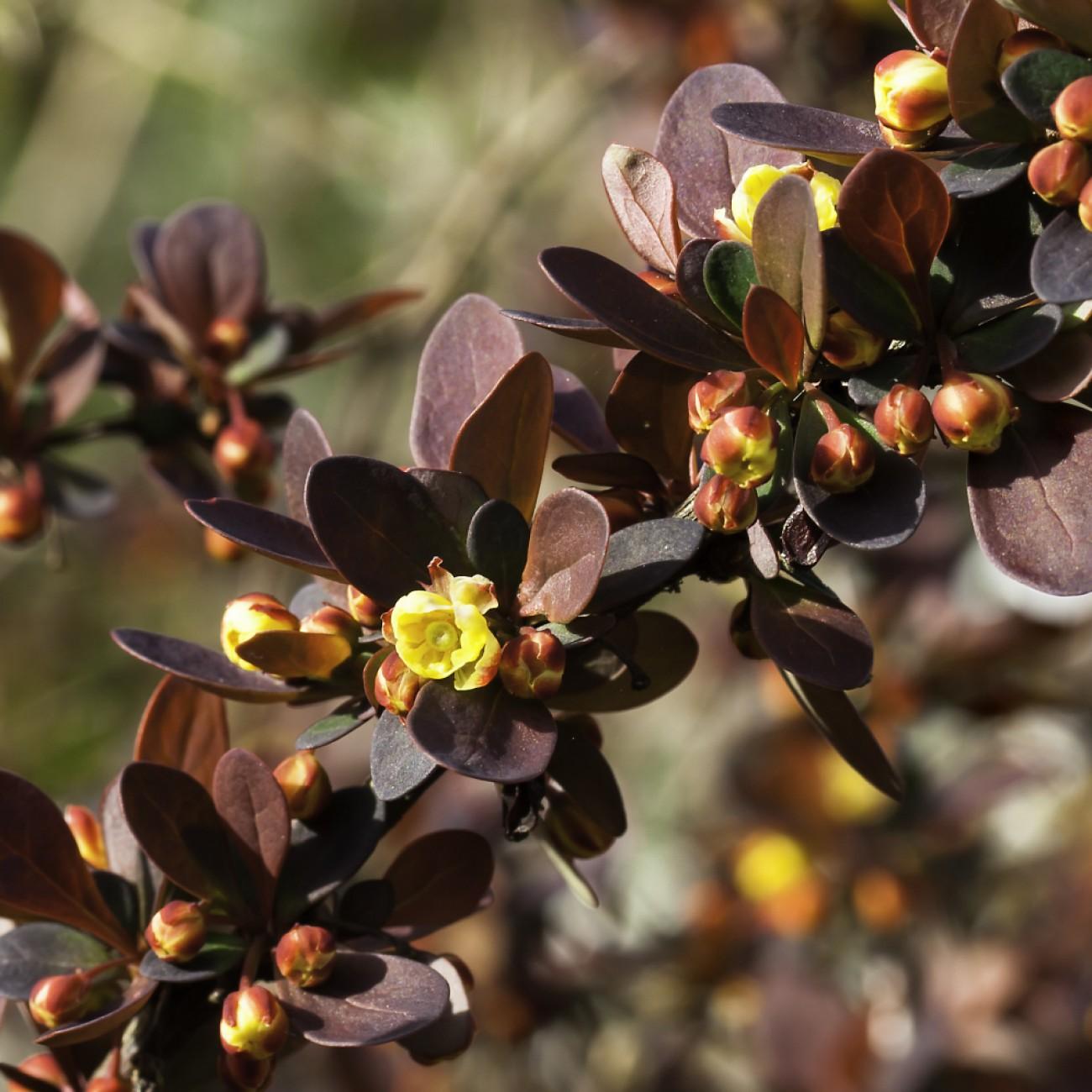
Japanese barberry
Berberis thunbergii f. atropurpurea 'Atropurpurea Nana'
Overview
Japanese barberry (Berberis thunbergii f. atropurpurea 'Atropurpurea Nana') is a stunningly beautiful plant species that will transform any landscape. Its dark red to purple foliage and bright yellow flowers provide a unique and eye-catching contrast. It is drought and shade tolerant and an ideal choice for an attractive evergreen hedge. This low maintenance plant is also deer and rabbit resistant. Since Japanese barberry is one of the few barberry species that stay a manageable size, it is perfect for hedges, edging, and for small spaces. Its plentiful branches offer exceptional year-round interest and make a wonderful addition to any garden or landscape.
Care Guide
Watering
Japanese Barberry (Berberis thunbergii f. atropurpurea 'Atropurpurea Nana') should be watered deeply and infrequently, no more than once or twice every 3 weeks. Water the plant until water runs out of the drainage holes in the bottom of the pot. Allow the soil to become dry to the touch between waterings. Avoid overwatering, as this may lead to root rot and other disease problems. You may water less often in winter, when the plant is dormant.
Light
Japanese barberry (Berberis thunbergii f. atropurpurea 'Atropurpurea Nana') thrives in full sun or semi-shade. It prefers 5-8 hours of direct sunlight in summer, or some partial shade in hot climates. During the winter, the plant should receive some direct sunlight in order to thrive, but not too much. To ensure that the plant receives the correct amount of sunlight, it may be beneficial to place it in a partially shaded area such as a porch or patio. Additionally, the plant should be placed in an area that receives some north or south-facing light in order to protect the foliage from too much direct sun.
Temperature
Hardiness zone 4–8.
Pruning
Pruning Japanese barberry (Berberis thunbergii f. atropurpurea 'Atropurpurea Nana') is an important part of maintaining the shrub’s health and promoting a compact, attractive form. Proper pruning will ensure that the plant retains its dense, bushy shape and continue to produce healthy new growth. The best time to prune is in the late winter or early spring, when new growth has just started. Start by removing any dead or damaged branches, then use pruning shears to trim away any branches that are too long or overlapping. Different varieties of Japanese barberry may require different amounts of pruning. For example, ‘Atropurpurea Nana’ is a compact variety and does not need to be pruned as heavily as some other varieties. Cut back approximately 1-third of the overall growth to maintain its size and shape. Be careful to leave some leafy branches at the tips of the stems, as this will help the shrub to remain bushy.
Propagation
Cutting, Layering Propagation, Grafting Propagation, Division, Seed Propagation
Uses & Symbolism
Attracts: Birds.
Related plants
Other plants you might like if you grow Japanese barberry.
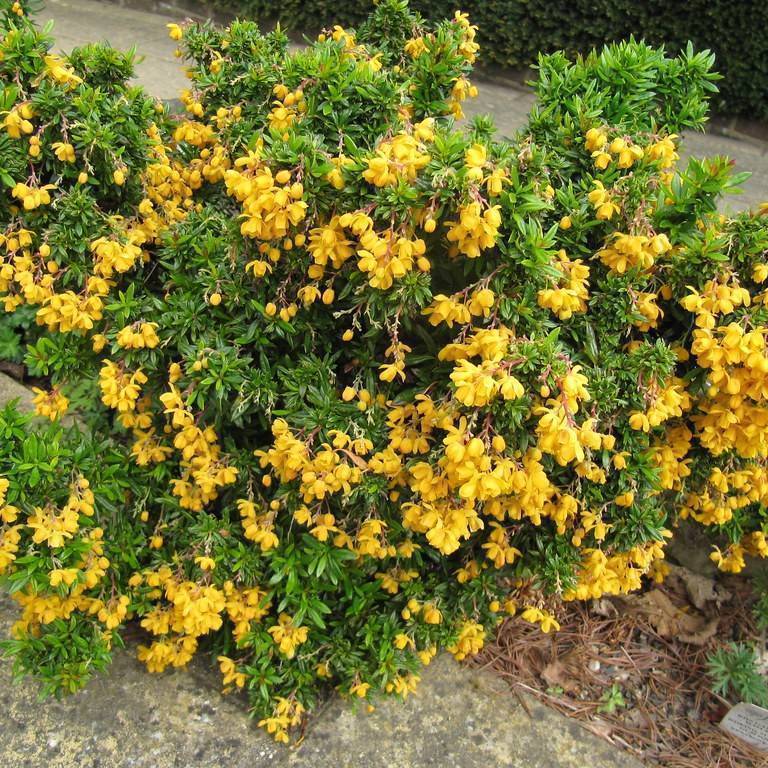
barberry
Berberis stenophylla 'Corallina Compacta'
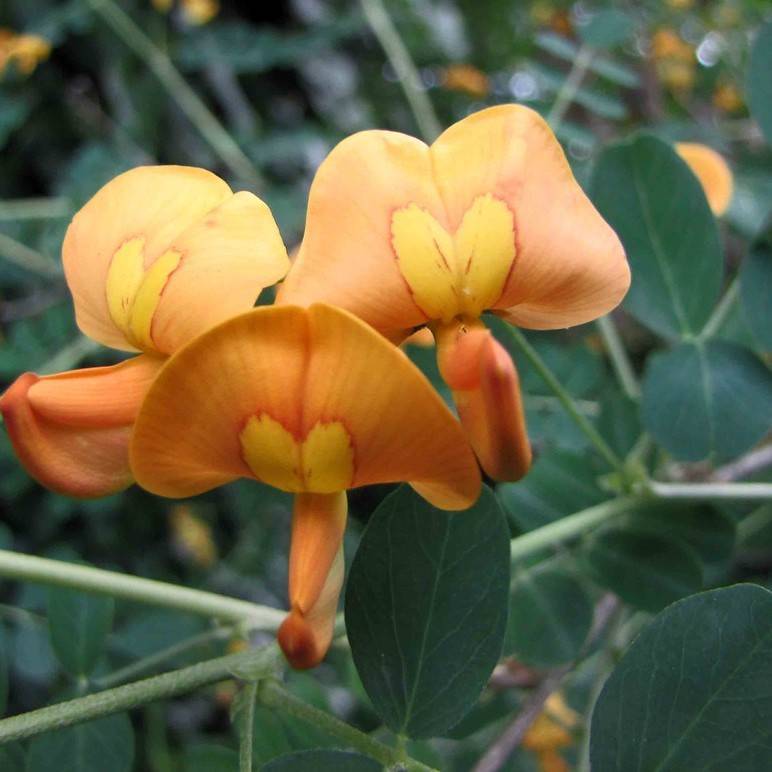
bladder senna
Colutea media
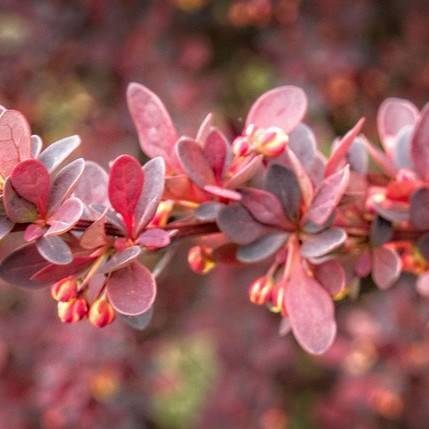
Japanese barberry
Berberis thunbergii
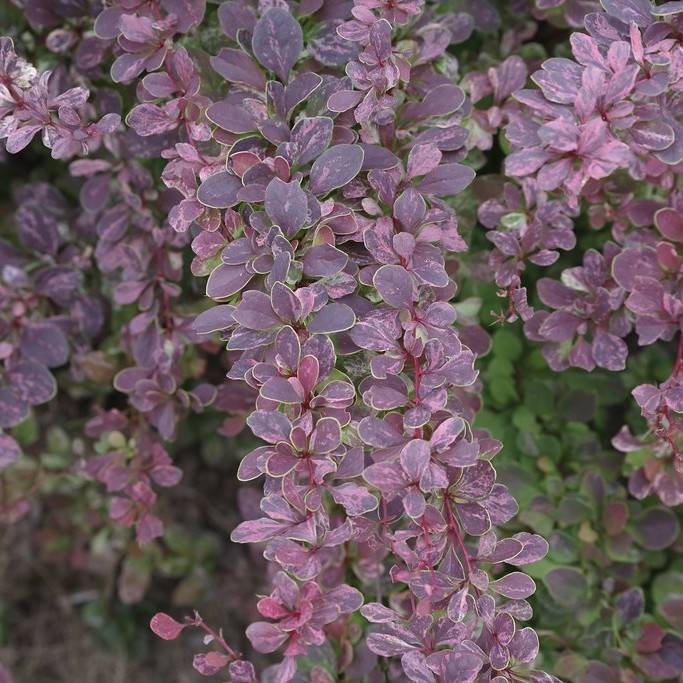
Japanese barberry
Berberis thunbergii f. atropurpurea
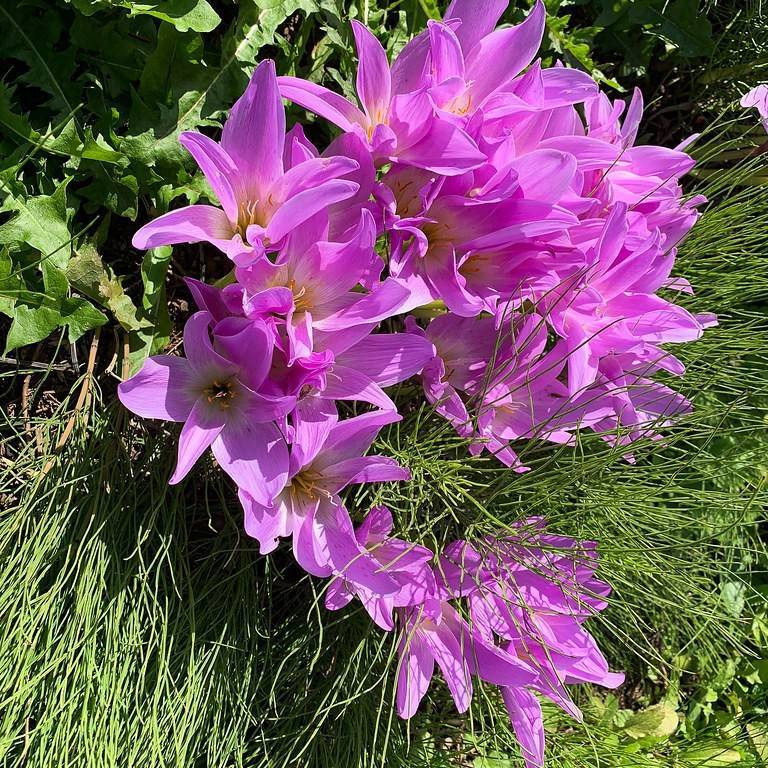
autumn crocus
Colchicum 'Violet Queen'
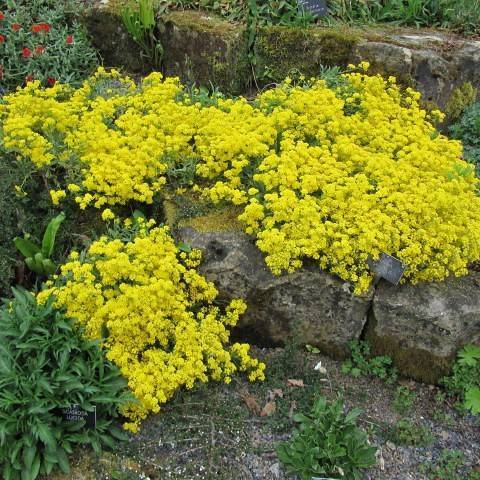
basket of gold
Aurinia saxatilis 'Gold Dust'
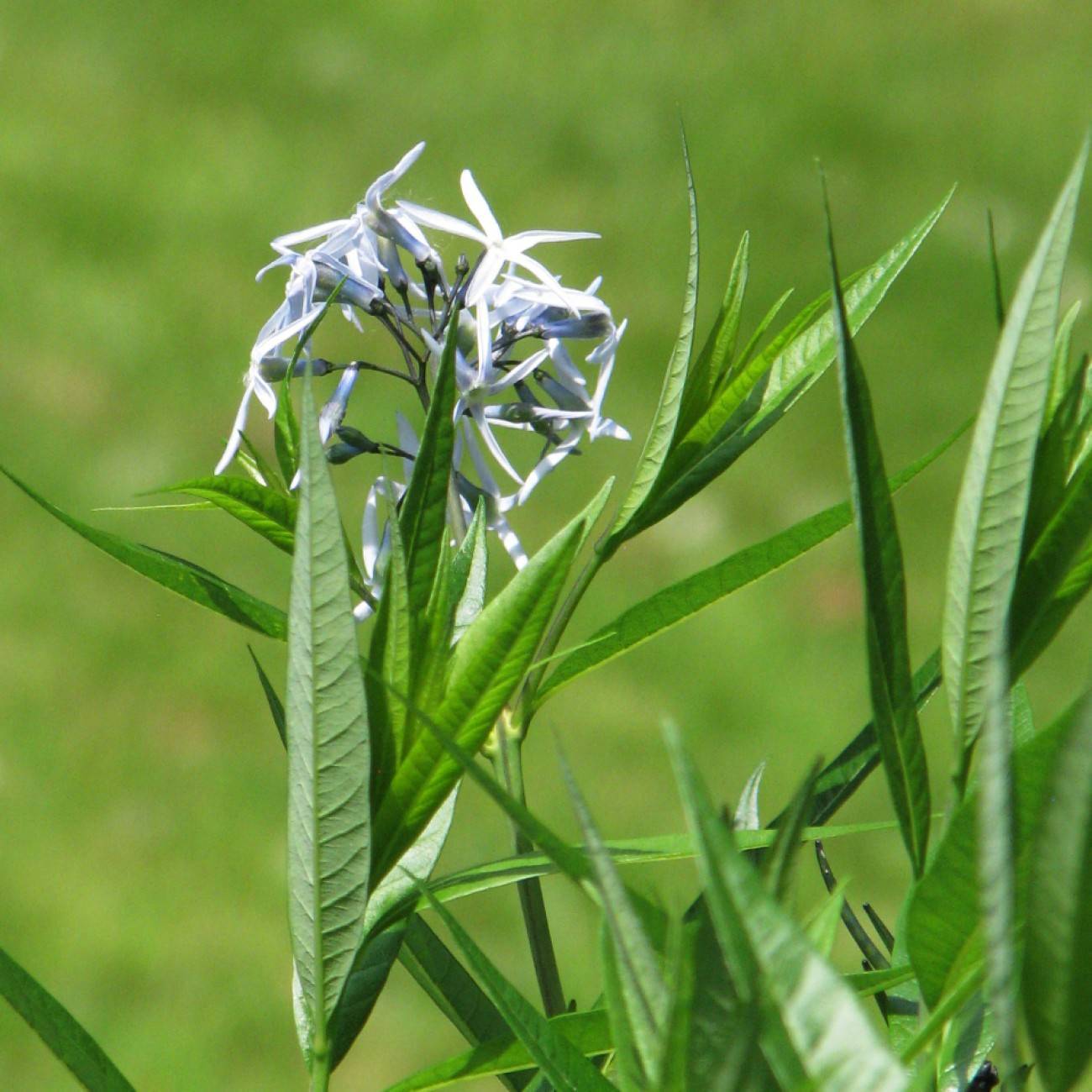
blue star
Amsonia ciliata var. filifolia 'Georgia Pancake'
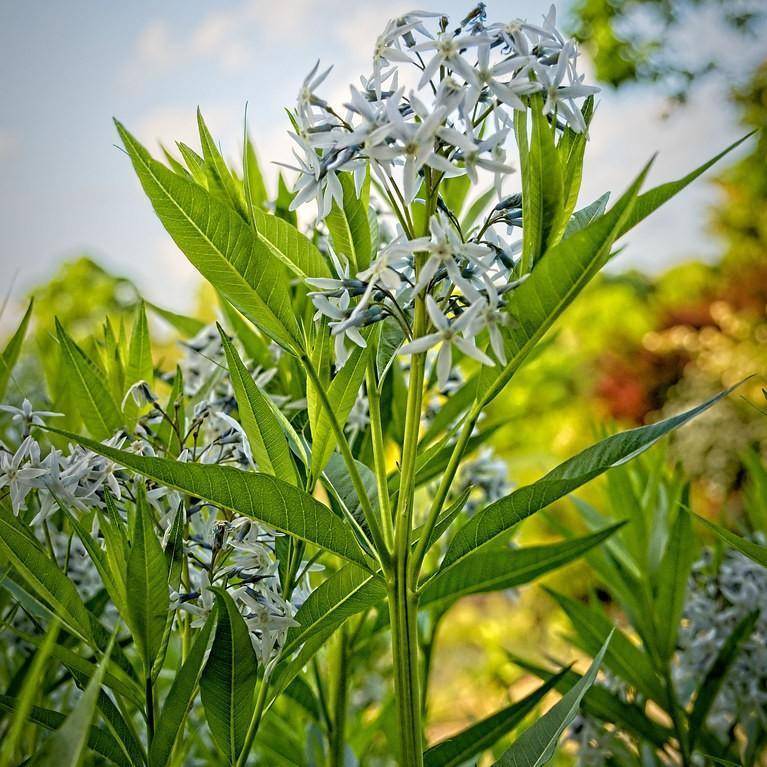
blue star
Amsonia tabernaemontana