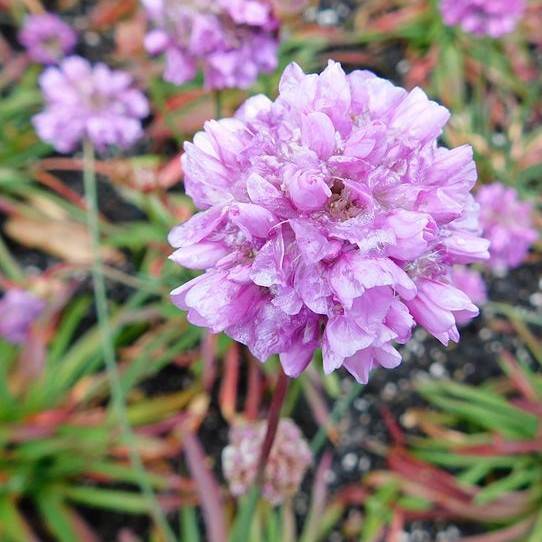
thrift
Armeria pseudarmeria 'Ballerina Lilac'
Overview
Thrift (Armeria pseudarmeria 'Ballerina Lilac') is an amazing flowering perennial. It has large, vibrant lilac flowers that bloom in clusters on top of slender stems. These flowers are frost tolerant and long lasting, making them ideal for garden beds, borders and as an accent in rock gardens. The foliage is evergreen and adds color to the landscape throughout the year. Thift is drought tolerant, easy to grow and is not affected by many pests or disease. Its long rooting habit allows it to survive in various conditions, making it an ideal choice for gardeners of any experience level. Its beautiful blooms and minimal maintenance make it the perfect addition to any garden.
Care Guide
Watering
Thrift (Armeria pseudarmeria 'Ballerina Lilac') should be watered regularly and deeply. Water the plant enough so that the soil is kept evenly moist and not allowed to dry out completely. During the growing season (spring and summer), water approximately once a week, or when the top 1-2 inches of soil feel dry to the touch. In the winter, water less frequently, allowing the soil to dry out before re-watering. Avoid over-watering, as this can cause the roots to rot.
Light
Thrift (Armeria pseudarmeria 'Ballerina Lilac') grows best in a sunny spot that receives at least 6 hours of direct sunlight. It does, however, tolerate partial shade, and can even withstand some periods of deep shade. It can even thrive in regions that have cool and snowy winters, as long as it receives plenty of sun during the summer months. When planting, choose a location that allows the plants to enjoy full sun until midday and partial shade afterwards. To ensure that Thrift thrives, be sure to provide it with adequate sunlight throughout the day.
Temperature
Hardiness zone 6–9.
Pruning
Thrift (Armeria pseudarmeria 'Ballerina Lilac') should be pruned annually in the late winter to early spring. Pruning should be done lightly and consist of removing any dead or damaged foliage, cutting back spent flowers, and shaping the plant, if desired. This type of pruning will promote bushier, more compact plants with longer lived flowers. Avoid cutting back the foliage too drastically as this can interfere with the health of the plant and its ability to flower.
Propagation
Division, Cutting, Layering Propagation, Seed Propagation, Grafting Propagation
Related plants
Other plants you might like if you grow thrift.